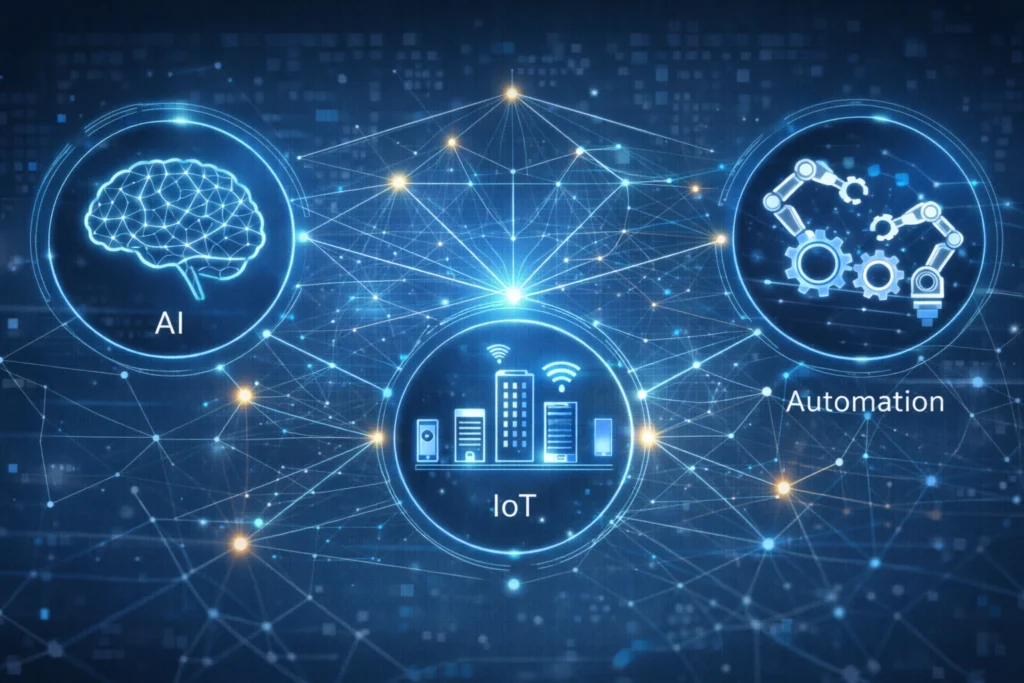
Hello readers! Not long ago, businesses relied on fax machines and dial-up internet to stay connected. Fast forward to today, and we’re living in a world where artificial intelligence (AI), the Internet of Things (IoT), and automation are reshaping how organizations operate. Managed IT services have been pivotal in helping businesses adapt to these rapid technological advancements, ensuring they remain competitive and efficient. In this article, I will explore the transformative trends of AI, IoT, and automation, and explain to you how they are shaping the future of Managed IT. Understanding these trends is essential for businesses looking to stay ahead in an increasingly digital landscape.
How Are AI and Automation Transforming Managed IT Services?
AI and automation are revolutionizing Managed IT services by streamlining processes, reducing downtime, and enabling smarter decision-making. These technologies are not just buzzwords; they are practical tools that are reshaping IT management in profound ways.
- AI-driven predictive maintenance: AI can analyze system performance data to predict potential failures before they occur, minimizing downtime and preventing costly disruptions. For example, machine learning algorithms can monitor server health and alert IT teams to address issues proactively.
- Automation in IT workflows: Repetitive tasks like patch management, software updates, and ticket routing can now be automated, freeing up IT teams to focus on strategic initiatives. This not only improves efficiency but also reduces human error.
- Ethical AI implementation: While AI offers immense potential, it must be implemented responsibly. A notable example is the Amazon résumé screener, which was found to exhibit bias against female candidates due to flawed training data. This highlights the importance of ethical considerations in AI deployment.
Superior managed IT providers play a crucial role in helping businesses implement AI and automation responsibly. By leveraging these technologies, organizations can achieve greater efficiency and innovation while avoiding potential pitfalls.
What Role Does IoT Play in the Future of Managed IT?

The Internet of Things (IoT) is another game-changer for Managed IT, connecting devices and generating valuable data that can drive smarter business decisions. However, IoT devices, such as Edge devices in real estate, also introduce new complexities and challenges for IT management, especially in BMS (Building Management Systems).
- Increased complexity: As IoT devices proliferate, managing a growing network of interconnected devices becomes a significant challenge. IT teams must ensure seamless integration and performance across diverse systems.
- Security concerns: IoT ecosystems are particularly vulnerable to cyberattacks. Robust cybersecurity measures, such as network segmentation and device authentication, are essential to protect sensitive data.
- Opportunities: IoT enables real-time data collection and analysis, leading to improved operational efficiency. For instance, smart building management systems can optimize energy use by adjusting lighting and HVAC systems based on occupancy and usage patterns.
Managed IT providers can help businesses navigate the complexities of IoT by offering expertise in device management, data security, and system integration. With the right support, organizations can unlock the full potential of IoT to drive innovation and efficiency.
What Are the Key Challenges in Adopting These Trends?
While AI, IoT, and automation offer significant benefits, businesses often face obstacles when integrating these technologies into their IT strategies. Understanding and addressing these challenges is critical for successful adoption.
- Cost and resource constraints: Implementing advanced technologies can be expensive, especially for small and medium-sized businesses. Balancing innovation with budget limitations requires careful planning and prioritization.
- Skill gaps: Many organizations lack the specialized expertise needed to deploy and manage AI, IoT, and automation effectively. Upskilling existing staff or partnering with experienced Managed IT providers can help bridge this gap.
- Security risks: As IT environments become more complex, ensuring data privacy and protection becomes increasingly challenging. Businesses must invest in robust cybersecurity measures to safeguard their systems and data.
Partnering with an experienced Managed IT provider can help businesses overcome these challenges. With expertise in IT strategy, infrastructure, and cybersecurity, great Managed IT providers can guide organizations through the complexities of adopting emerging technologies.
Conclusion
The future of Managed IT is being shaped by transformative trends like AI, IoT, and automation. These technologies offer exciting possibilities for improving efficiency, enhancing decision-making, and driving innovation. However, they also come with challenges that require careful planning and expertise to address.
- Staying informed about emerging technologies is essential for businesses looking to remain competitive.
- Organizations should assess their current IT infrastructure and identify areas where AI, IoT, and automation can add value.
- Partnering with a trusted Managed IT provider can provide the guidance and support needed to navigate these trends effectively.
As we look ahead, the integration of AI, IoT, and automation into Managed IT services promises to unlock new opportunities for businesses across industries. By embracing these advancements, organizations can position themselves for success in a rapidly evolving technology landscape over the past couple of years.
About Irfan Butt

CRES Technology – Founder and CEO
A strategic leader with over twenty years of progressive experience in Business Administration, Finance, Product Development, and Project Management. Irfan has a proven track record in a broad range of industries, including hospitality, real estate, banking, finance, and management consulting.