Cybersecurity often feels like a relentless game of “whack-a-mole.” Just when you think you’ve addressed one threat, another pops up, more sophisticated and harder to tackle. For businesses, this isn’t just an annoyance; it’s a critical challenge that can have serious consequences. In this article, we’ll explore the top five cybersecurity threats businesses face today, their potential impact, and practical steps you can take to mitigate them. Whether you’re a small business or a large enterprise, understanding these threats is the first step toward protecting your organization.
Why Is Understanding Cybersecurity Threats Critical for Businesses?
Cyberattacks are becoming more frequent and sophisticated, and businesses can no longer afford to take a reactive approach to cybersecurity. Ignoring these threats can lead to severe financial, reputational, and operational consequences.
- Financial impact: The average cost of a data breach globally was $4.45 million in 2023, according to IBM’s Cost of a Data Breach Report. For small and midsize businesses, even a fraction of this cost can be devastating.
- Reputational damage: A single breach can erode customer trust, leading to lost business and long-term brand damage.
- Operational disruption: Attacks like ransomware can bring business operations to a standstill, causing delays, lost revenue, and frustrated customers.
What Are the Top 5 Cybersecurity Threats?
Below are the five most pressing cybersecurity threats businesses face today. For each, we’ll explain what it is, why it matters, and how you can protect your organization.
1. Phishing Attacks
Phishing remains one of the most common and effective cyberattacks, targeting employees through deceptive emails or messages designed to steal credentials, install malware, or commit financial fraud.
- Why it matters: Phishing attacks can lead to significant financial losses, data breaches, and reputational harm.
- Example: The 2016 phishing attack on a major political campaign resulted in the exposure of thousands of sensitive emails, demonstrating how even high-profile organizations are vulnerable.
- Prevention tips: Implement employee training programs, use email filtering tools, and enforce multi-factor authentication (MFA).
2. Ransomware
Ransomware attacks encrypt business data and demand payment for its release, often crippling operations and causing widespread disruption.
- Why it matters: Ransomware attacks have surged in recent years, targeting businesses of all sizes and industries.
- Example: The 2021 Colonial Pipeline attack disrupted fuel supply across the U.S., highlighting the far-reaching impact of ransomware.
- Prevention tips: Regularly back up data, deploy endpoint protection solutions, and develop an incident response plan to minimize downtime.
3. Insider Threats
Insider threats, whether malicious or accidental, pose significant risks to businesses. These threats often come from employees, contractors, or partners with access to sensitive systems and data.
- Why it matters: Insider threats are harder to detect and can cause extensive damage before being identified.
- Example: In 2020, a former employee of a major financial institution intentionally leaked sensitive customer data, resulting in regulatory fines and reputational damage.
- Prevention tips: Use access controls, implement employee monitoring tools, and provide regular security training to minimize risks.
4. Supply Chain Attacks
Supply chain attacks target third-party vendors or suppliers to compromise a business indirectly. These attacks can bypass traditional security measures and affect multiple organizations simultaneously.
- Why it matters: Supply chain attacks can have a cascading effect, impacting not just one business but its entire ecosystem.
- Example: The SolarWinds attack in 2020 compromised thousands of organizations globally, including government agencies and Fortune 500 companies.
- Prevention tips: Conduct vendor risk assessments, adopt a zero-trust architecture, and monitor third-party access to your systems.
5. Weak Passwords and Credential Theft
Poor password hygiene and stolen credentials remain a major vulnerability for businesses, providing attackers with an easy entry point into systems.
- Why it matters: Weak or reused passwords are a common factor in data breaches, making them a critical area to address.
- Example: A 2021 breach exposed millions of user accounts due to reused passwords, underscoring the importance of strong password policies.
- Prevention tips: Enforce strong password policies, encourage the use of password managers, and require multi-factor authentication for all accounts.
How Can Businesses Protect Themselves Against These Threats?
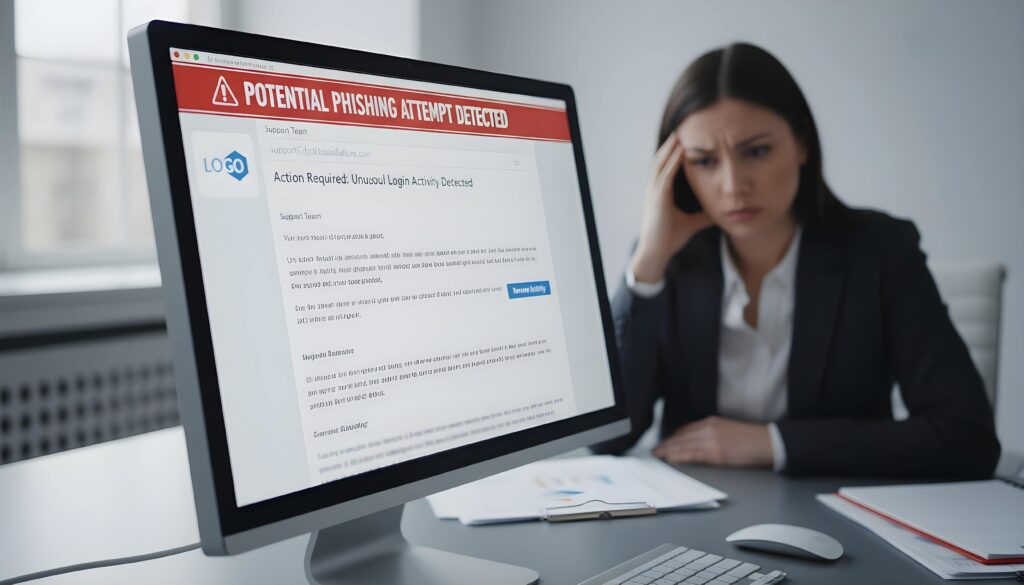
Protecting your business from cybersecurity threats requires a proactive and layered approach. Here are some key strategies to mitigate risks:
- Employee training: Regularly educate staff on recognizing and responding to phishing attempts, suspicious activity, and other threats.
- Advanced tools: Invest in tools like endpoint detection and response (EDR), firewalls, and secure email gateways to strengthen your defenses.
- Incident response plans: Develop and test plans to respond quickly to breaches or attacks, minimizing downtime and damage.
- Managed IT services: For small and midsize businesses, partnering with a reputable managed IT service provider like CRES Technology can provide 24/7 monitoring, risk assessments, and tailored cybersecurity solutions.
Conclusion
Cybersecurity is not a one-time fix; it’s an ongoing process that requires vigilance, education, and the right tools. To protect your business, start by assessing your current cybersecurity posture and addressing vulnerabilities. Implement a layered security approach to guard against multiple threat vectors, and consider partnering with experts like CRES Technology to develop and maintain a robust cybersecurity strategy.
Remember, staying informed about emerging threats is key to long-term protection. By taking proactive steps today, you can safeguard your business against the ever-evolving landscape of cybersecurity risks.
How we can help:
CRES Technology ensures to keep your network and data protected so that you can feel secure and confident.

Many of our clients were in danger of becoming a victims of cybersecurity attacks. They needed an IT security to help prevent attacks from ever happening and help them recover if an attack did happen. That’s where CRES Cybersecurity comes in.
With our extensive capabilities in cybersecurity and partnership with top cybersecurity software companies, we enable you to prevent cyber attacks, network exploitation, data breaches, phishing emails, and more. Our RMM audit assesses the health of your network and resources. We offer network penetration testing to prevent network exploitation, implement data loss prevention policies to prevent data breaches, and phishing email testing to teach your staff to identify phishing emails. CRES Technology implements state-of-the-art Endpoint Detection & Response solutions, allowing your company to be able to recover from any kind of damage caused by cybercriminals.
About Irfan Butt

CRES Technology – Founder and CEO
A strategic leader with over twenty years of progressive experience in Business Administration, Finance, Product Development, and Project Management. Irfan has a proven track record in a broad range of industries, including hospitality, real estate, banking, finance, and management consulting.