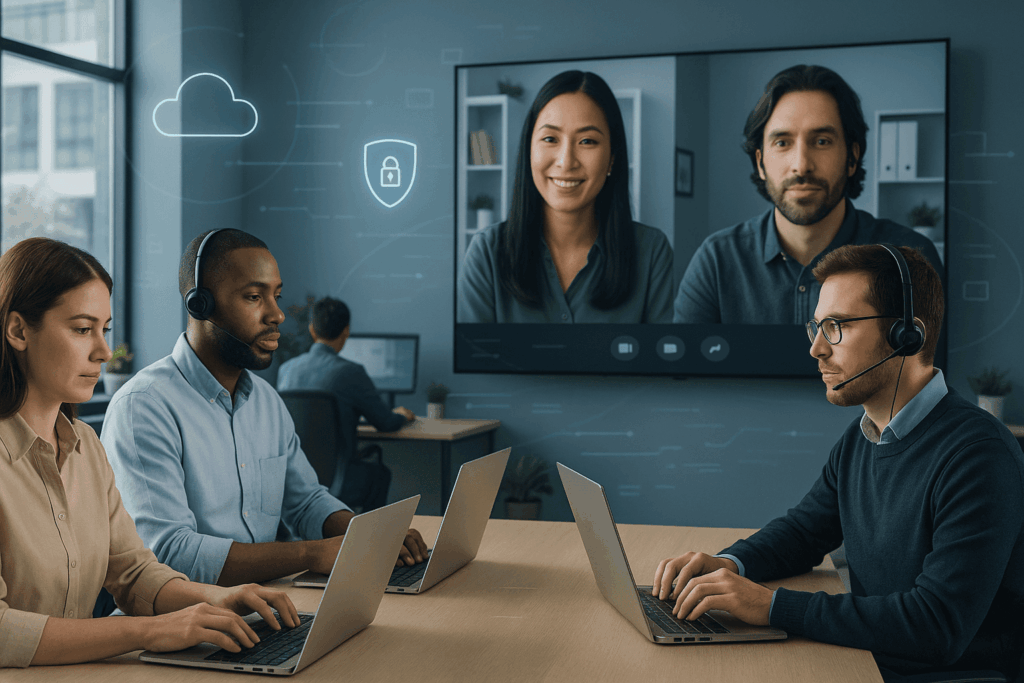
Hybrid workforces are no longer a trend they’re the new reality for businesses worldwide. As organizations adapt to this model, they face unique challenges in maintaining productivity and security for employees working both remotely and in the office. From communication gaps to cybersecurity risks, the stakes are high. A robust IT infrastructure is the backbone of a successful hybrid workforce, ensuring seamless operations and safeguarding sensitive data. In this blog, we’ll explore the strategies and tools businesses need to build and maintain an effective IT infrastructure for hybrid workforces.
The Rise of Hybrid Workforces
Defining Hybrid Work
Hybrid workforces combine remote and in-office work, offering employees the flexibility to choose where they work. This model gained traction post-pandemic as businesses sought to balance operational continuity with employee well-being.
Benefits of Hybrid Work
- Flexibility: Employees can work in environments that suit their productivity and personal needs.
- Employee Satisfaction: Hybrid work has been shown to improve morale and reduce burnout.
- Cost Savings: Businesses save on office space and utilities, while employees save on commuting costs.
Challenges of Hybrid Work
- Communication Gaps: Ensuring seamless collaboration between remote and in-office teams can be difficult.
- Security Risks: Remote work increases exposure to cyber threats like phishing and ransomware.
- IT Management Complexities: Managing a distributed workforce requires more sophisticated IT solutions and support.
Key Components of IT Infrastructure for Hybrid Workforces
1. Reliable Connectivity
High-speed internet and secure VPNs are essential for remote employees to stay connected. Seamless connectivity between remote and in-office teams ensures smooth collaboration and uninterrupted workflows.
2. Cloud-Based Solutions
Cloud platforms like Microsoft 365, Google Workspace, and Dropbox enable real-time collaboration and data accessibility from anywhere. These tools eliminate the need for physical storage and make it easier for teams to work together, regardless of location.
3. Endpoint Security
Protecting devices is critical in a hybrid environment. Antivirus software, firewalls, and encryption safeguard sensitive data, while mobile device management (MDM) solutions secure remote endpoints and ensure compliance with company policies.
4. Identity and Access Management (IAM)
IAM tools like multi-factor authentication (MFA) and single sign-on (SSO) enhance security by ensuring only authorized users have access to company systems. Role-based access control further limits data exposure, reducing the risk of breaches.
5. Collaboration and Communication Tools
Platforms like Slack, Microsoft Teams, and Zoom are essential for hybrid teams to communicate effectively. These tools should be user-friendly and integrated into workflows to minimize disruptions and maximize productivity.
6. IT Support and Monitoring
Providing 24/7 IT support ensures technical issues are resolved promptly, minimizing downtime. Monitoring tools help maintain system performance and security, giving businesses peace of mind.
Best Practices for Maintaining Productivity and Security
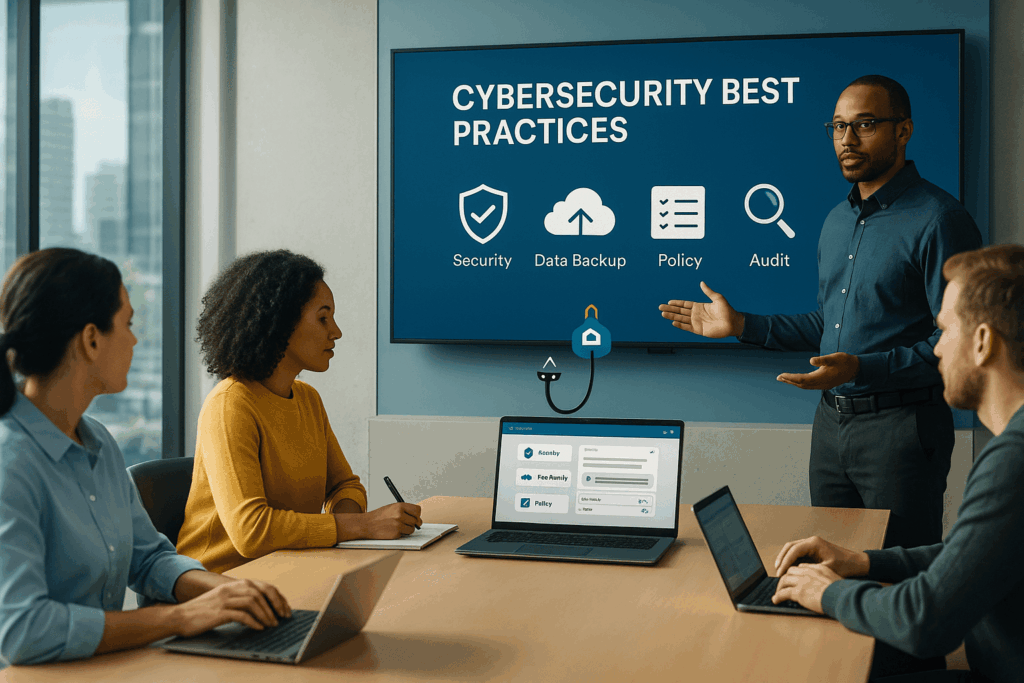
- Regular Training: Educate employees on cybersecurity and best practices for remote work to reduce human error.
- Data Backup: Implement automated backups to prevent data loss and ensure business continuity.
- Policy Enforcement: Develop and enforce clear IT policies tailored to hybrid work environments.
- Periodic Audits: Conduct regular audits to identify vulnerabilities and address them proactively.
Future Trends in IT Infrastructure for Hybrid Workforces
- AI-Driven Tools: Artificial intelligence will play a larger role in IT management and cybersecurity, automating routine tasks and identifying threats faster.
- Zero-Trust Security Models: Businesses will increasingly adopt zero-trust frameworks to enhance security in hybrid environments.
- Virtual and Augmented Reality: Advancements in VR and AR will revolutionize remote collaboration, making virtual meetings more immersive and interactive.
Conclusion
Building a robust IT infrastructure is essential for supporting hybrid workforces. Reliable connectivity, cloud-based solutions, endpoint security, and effective IT support are just a few of the key components that ensure productivity and security. By adopting best practices like regular training and policy enforcement, businesses can overcome the challenges of hybrid work and unlock their full potential.
At CRES Technology, we specialize in helping businesses design and implement IT infrastructures tailored to their unique needs. Whether you’re looking to enhance connectivity, secure endpoints, or adopt cloud solutions, our team is here to guide you every step of the way. Embrace the future of work with confidence—your hybrid workforce deserves nothing less.
How we can help:
We offer proactive support for the health of your network and systems, so that you don’t face any operational challenges.
Many of our new clients faced these challenges. Their IT support worked in a reactive way since they would wait for problems to happen and then fix them. This approach was costly and counterproductive. With our proactive approach, we take action to prevent operational challenges from ever happening.
That is what makes CRES Technology stand out from the rest. Unlike most MSPs, we take action to prevent operational challenges from ever happening. We take a proactive approach to remotely monitor your network resources, perform routine preventive maintenance on your devices and your systems, manage user access, cybersecurity, e-mail services, and the administration of your business applications.
About Irfan Butt

CRES Technology – Founder and CEO
A strategic leader with over twenty years of progressive experience in Business Administration, Finance, Product Development, and Project Management. Irfan has a proven track record in a broad range of industries including hospitality, real estate, banking, finance, and management consulting.