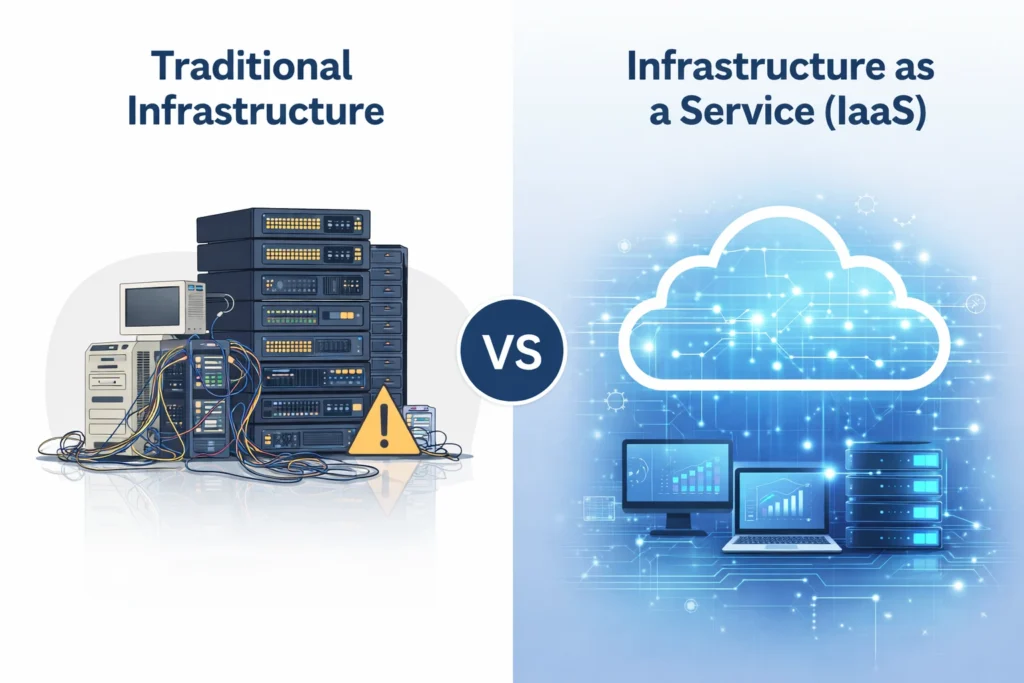
As the Founder and CEO of CRES Technology, I’ve witnessed firsthand how IT infrastructure has evolved over the years. I still remember visiting a client’s office in the early 2000s, where their server room was the size of a small apartment and required its own dedicated air conditioning unit. It was noisy, expensive, and a logistical nightmare to maintain. Fast forward to today, and Infrastructure as a Service (IaaS) has completely revolutionized how businesses manage their IT needs. No more bulky hardware or endless maintenance headaches—just scalable, efficient, and cost-effective solutions delivered through the cloud. In this article, we’ll explore what IaaS is, its benefits, and how it’s reshaping infrastructure management for businesses of all sizes.
What is IaaS and Why Does It Matter?
IaaS, or Infrastructure as a Service, is a cloud computing model where businesses rent virtualized computing resources over the internet instead of owning and maintaining physical hardware. It provides a flexible, scalable, and cost-effective alternative to traditional on-premises infrastructure.
- Core Components: IaaS typically includes compute (virtual machines), storage (cloud-based data storage), and networking (virtual networks and load balancers).
- Pay-As-You-Go Model: Businesses only pay for the resources they use, eliminating the need for large upfront investments in hardware and reducing ongoing maintenance costs.
- Eliminating Physical Hardware: With IaaS, businesses no longer need to manage physical servers, freeing up office space and IT resources for more strategic initiatives.
By leveraging IaaS, businesses can focus on innovation and growth rather than being bogged down by infrastructure management.
How Does IaaS Solve Common Business Pain Points?
Traditional IT infrastructure often presents significant challenges, from scalability issues to high costs. IaaS addresses these pain points effectively:
- Scalability: IaaS allows businesses to scale resources up or down based on demand. For example, an e-commerce company can handle traffic spikes during the holiday season without over-provisioning resources during quieter months.
- Cost Efficiency: By shifting from capital expenditures to operational expenditures, businesses can avoid large upfront investments and only pay for what they use.
- Disaster Recovery: IaaS simplifies backup and recovery processes. Cloud providers often have robust disaster recovery solutions, ensuring business continuity even during unexpected events.
- Global Reach: With data centers located worldwide, IaaS providers enable businesses to expand into new markets without the need for physical infrastructure in those regions.
What Are the Risks and Challenges of IaaS?
While IaaS offers numerous benefits, it’s not without its challenges. Businesses should be aware of these risks and take steps to mitigate them:
- Security Concerns: Although cloud providers invest heavily in security, data stored in the cloud can still be vulnerable to breaches if not properly managed. Businesses must ensure they implement strong access controls and encryption.
- Vendor Lock-In: Relying on a single IaaS provider can make it difficult to switch providers or move workloads. Businesses should plan for portability by using open standards and multi-cloud strategies.
- Cost Management: Without proper monitoring, businesses may face unexpected expenses due to overuse of resources. Implementing usage tracking tools can help avoid this issue.
How is IaaS Transforming IT Roles and Business Operations?

IaaS is not just about technology; it’s also transforming how IT teams and businesses operate:
- Shift to Strategic IT: IT teams can focus on strategic initiatives like innovation and digital transformation instead of hardware maintenance.
- Support for Emerging Technologies: IaaS provides the computational power needed for AI, machine learning, and big data analytics, enabling businesses to stay competitive.
- Accelerating Digital Transformation: By removing infrastructure constraints, IaaS allows businesses to adopt new technologies and processes faster.
For example, a healthcare provider can use IaaS to deploy machine learning models that analyze patient data, improving diagnosis and treatment outcomes.
How to Choose the Right IaaS Provider?
Choosing the right IaaS provider is critical to maximizing its benefits. Here are some key criteria to consider:
- Performance and Reliability: Look for providers with a proven track record of uptime and performance.
- Security Measures: Ensure the provider complies with industry standards and offers robust security features.
- Scalability: Choose a provider that can scale resources to meet your business’s changing needs.
- Cost Transparency: Select a provider with clear pricing models to avoid hidden fees.
- Support and Customer Service: Reliable support can make a significant difference in resolving issues quickly.
- Integration: Ensure the provider’s solutions integrate seamlessly with existing tools like Microsoft 365.
While price is an important factor, it shouldn’t be the sole consideration. A cheaper provider may lack the reliability, security, or support your business needs.
Conclusion
IaaS is revolutionizing the way businesses manage their IT infrastructure, offering scalability, cost efficiency, and operational flexibility. For SMBs and enterprises alike, it’s an opportunity to focus on growth and innovation rather than hardware maintenance.
- Evaluate your current IT needs and consider how IaaS could address your challenges.
- Plan for a smooth transition by choosing the right provider and implementing best practices.
By embracing IaaS, businesses can unlock new opportunities and stay ahead in an increasingly competitive landscape.
Read More About IT Infrastructure: Building Reliable IT Infrastructure for Business Growth
How we can help:
We offer proactive support for the health of your network and systems, so that you don’t face any operational challenges.
Many of our new clients faced these challenges. Their IT support worked in a reactive way since they would wait for problems to happen and then fix them. This approach was costly and counterproductive. With our proactive approach, we take action to prevent operational challenges from ever happening.
That is what makes CRES Technology stand out from the rest. Unlike most MSPs, we take action to prevent operational challenges from ever happening. We take a proactive approach to remotely monitor your network resources, perform routine preventive maintenance on your devices and your systems, manage user access, cybersecurity, e-mail services, and the administration of your business applications.
About Irfan Butt

CRES Technology – Founder and CEO
A strategic leader with over twenty years of progressive experience in Business Administration, Finance, Product Development, and Project Management. Irfan has a proven track record in a broad range of industries including hospitality, real estate, banking, finance, and management consulting.