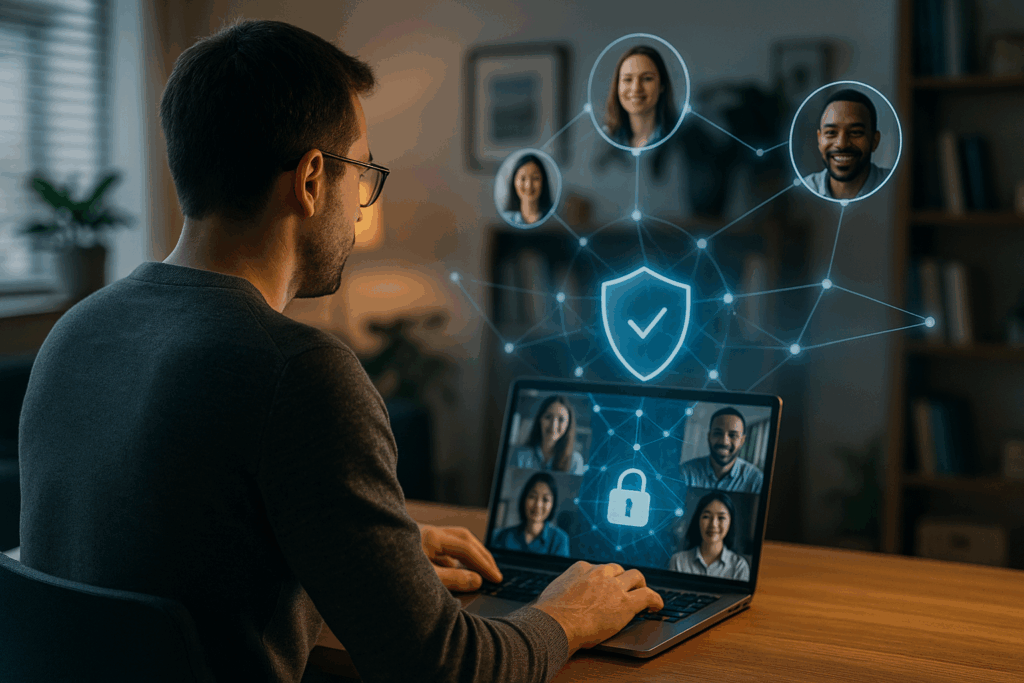
Imagine this: an employee working from home accidentally shares sensitive company data over an unsecured home Wi-Fi network. It’s a simple mistake, but one that could have serious consequences for the organization. As remote and hybrid work models become the norm, businesses face unique cybersecurity challenges that require proactive solutions. The decentralized nature of these work environments introduces new vulnerabilities, making it essential to create a robust cybersecurity plan. In this article, we’ll outline actionable steps to build an effective strategy tailored to remote and hybrid workforces.
Why Is Cybersecurity More Challenging for Remote and Hybrid Workforces?
The shift to remote and hybrid work has significantly increased the attack surface for cyber threats. Unlike traditional office environments, where IT teams can control and secure a centralized network, remote work decentralizes operations, creating new vulnerabilities. Here are some key challenges:
- Personal devices: Employees often use personal laptops or smartphones that may lack adequate security measures, increasing the risk of malware infections.
- Unsecured networks: Home Wi-Fi networks or public hotspots are often less secure than corporate networks, making them prime targets for attackers.
- Phishing attacks: Remote employees are more likely to fall victim to phishing scams, especially when working in isolation without immediate access to IT support.
For example, during the early months of the pandemic, phishing attacks surged by 667%, according to CISA, as cybercriminals exploited the rapid shift to remote work. Addressing these vulnerabilities proactively is critical to protecting sensitive data and systems.
What Are the Key Components of a Cybersecurity Plan for Remote Teams?
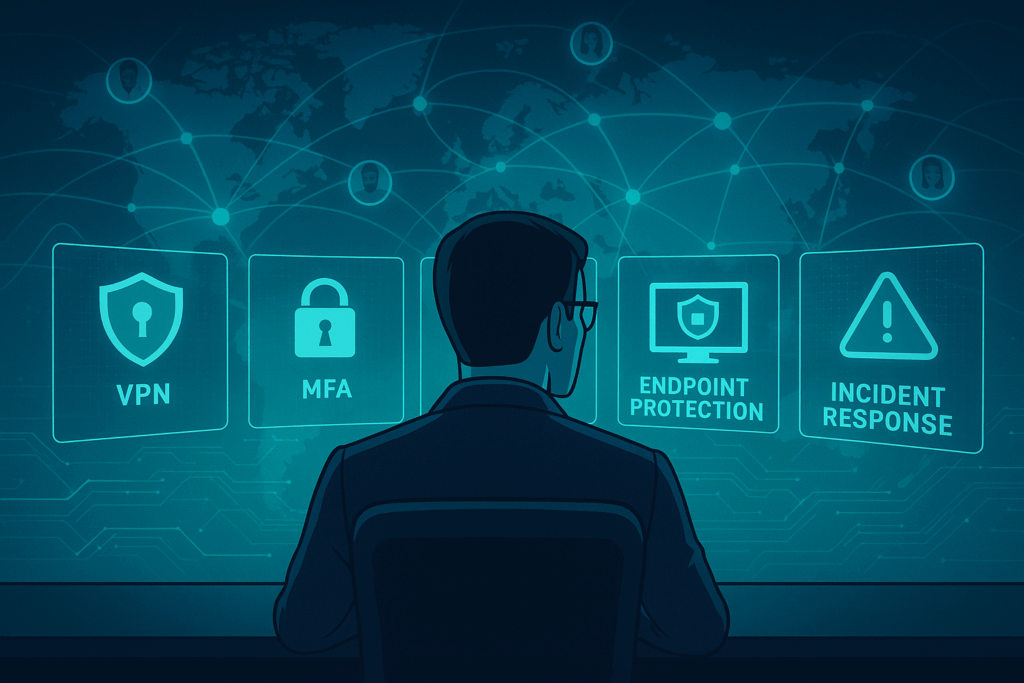
An effective cybersecurity plan for remote and hybrid workforces should include the following core components:
- Secure access: Implement VPNs, multi-factor authentication (MFA), and role-based access controls to ensure only authorized users can access company systems.
- Endpoint protection: Ensure all devices, whether personal or company-issued, have updated antivirus software, firewalls, and endpoint detection tools.
- Data encryption: Encrypt sensitive data both at rest and in transit to protect it from unauthorized access.
- Employee training: Conduct regular training sessions to educate employees on recognizing phishing attempts, avoiding suspicious links, and practicing good cyber hygiene.
- Incident response plan: Develop a clear protocol for responding to breaches or suspicious activity, including steps for containment, investigation, and recovery.
How Can Businesses Secure Remote Access to Company Systems?
Securing remote access is one of the most critical aspects of protecting company systems. Unauthorized access can lead to data breaches, ransomware attacks, and other costly incidents. Here are some best practices:
- Use VPNs: Virtual private networks encrypt connections, ensuring that data transmitted between employees and company systems remains secure.
- Implement MFA: Multi-factor authentication adds an extra layer of security by requiring users to verify their identity through a second factor, such as a code sent to their phone.
- Restrict access: Use role-based access controls to limit employees’ access to only the systems and data necessary for their job responsibilities.
A real-world example of the risks associated with unsecured remote access is the 2020 Twitter hack, where attackers gained access to internal systems by compromising employee credentials. This breach highlights the importance of securing remote access to prevent unauthorized entry.
What Role Does Employee Training Play in Cybersecurity?
Employees are often the first line of defense against cyber threats, making regular training an essential component of any cybersecurity plan. Without proper training, even the most advanced security measures can be undermined by human error. Here’s why training matters:
- Phishing awareness: Educating employees on how to identify phishing emails and avoid suspicious links can significantly reduce the risk of successful attacks.
- Policy adherence: Training ensures employees understand and follow company security policies, such as using secure file-sharing tools or reporting suspicious activity.
- Simulated tests: Conducting phishing simulations can help assess employee awareness and identify areas for improvement.
For example, a company that implemented regular phishing simulations saw a 70% reduction in employees clicking on malicious links, demonstrating the effectiveness of ongoing training programs.
How Can Businesses Balance Security with Employee Productivity?
Implementing strict security measures can sometimes create friction for employees, potentially impacting productivity. Striking the right balance between security and usability is key to maintaining an efficient and secure remote workforce. Here are some tips:
- Use user-friendly tools: Choose security solutions that integrate seamlessly into workflows, such as single sign-on (SSO) systems or password managers.
- Provide clear guidelines: Establish clear policies on the acceptable use of personal devices and networks, ensuring employees understand their responsibilities.
- Offer IT support: Provide accessible IT support to help employees troubleshoot security-related issues quickly, minimizing disruptions to their work.
For example, providing employees with pre-configured devices that include necessary security tools can reduce the burden on both employees and IT teams, ensuring a smoother experience.
Conclusion
As remote and hybrid workforces become the norm, creating a comprehensive cybersecurity plan is no longer optional it’s essential. By addressing the unique challenges of decentralized work environments, businesses can protect their sensitive data and systems while empowering employees to work securely and productively.
Take the time to assess your current cybersecurity measures and identify any gaps. Are your employees equipped to handle today’s cyber threats? If not, it’s time to take action. CRES Technology offers expertise in cybersecurity planning and implementation, including solutions tailored to remote and hybrid work environments. Let us help you build a proactive and effective cybersecurity strategy to safeguard your business.
How we can help:
CRES Technology ensures to keep your network and data protected so that you can feel secure and confident.

Many of our clients were in danger of becoming a victims of cybersecurity attacks. They needed an IT security to help prevent attacks from ever happening and help them recover if an attack did happen. That’s where CRES Cybersecurity comes in.
With our extensive capabilities in cybersecurity and partnership with top cybersecurity software companies, we enable you to prevent cyber attacks, network exploitation, data breaches, phishing emails, and more. Our RMM audit assesses the health of your network and resources. We offer network penetration testing to prevent network exploitation, implement data loss prevention policies to prevent data breaches, and phishing email testing to teach your staff to identify phishing emails. CRES Technology implements state-of-the-art Endpoint Detection & Response solutions, allowing your company to be able to recover from any kind of damage caused by cybercriminals.
About Irfan Butt

CRES Technology – Founder and CEO
A strategic leader with over twenty years of progressive experience in Business Administration, Finance, Product Development, and Project Management. Irfan has a proven track record in a broad range of industries, including hospitality, real estate, banking, finance, and management consulting.