

Think of IT infrastructure as the backbone of your business. If it’s weak or poorly designed, everything else struggles to function. Whether it’s managing customer data, enabling seamless communication, or hosting critical applications, IT infrastructure plays a pivotal role in keeping your business running smoothly. A reliable IT infrastructure ensures scalability, efficiency, and security, which are essential for thriving in today’s competitive business environment.
In this article, I’ll explore what IT infrastructure is, its core components, and how it supports business growth. We’ll also discuss the risks of neglecting IT infrastructure and provide actionable steps to build a strong foundation for your organization.

What Is IT Infrastructure and Why Is It Important?
IT infrastructure refers to the combination of hardware, software, networks, and cloud services that support a business’s operations. It’s the foundation upon which all digital processes and workflows are built.
- Hardware: This includes servers, storage devices, and networking equipment that enable data processing and communication.
- Software: Operating systems, applications, and management tools that power business operations.
- Cloud Services: Platforms that provide scalable computing resources, data storage, and remote access capabilities.
IT infrastructure is like the foundation of a skyscraper; it must be strong and scalable to support growth. Without it, businesses risk operational inefficiencies, downtime, and security vulnerabilities. For example, reliable infrastructure ensures employees can collaborate effectively, customers can access services without interruptions, and critical data is stored securely.
What Are the Core Components of a Reliable IT Infrastructure?

A robust IT infrastructure is built on several key components that work together to ensure reliability, scalability, and security:
Scalable Hardware
First, determine if you really need physical infrastructure, especially when it comes to servers. If you decide to invest in servers, storage, and networking equipment like switches and firewalls, make sure that this infrastructure can grow with your business. Scalable hardware allows you to add users, devices, and applications without major disruptions. For instance, modular servers can be upgraded with additional processing power or storage as your needs evolve.
Cloud Solutions
Cloud computing and Infrastructure as a Service (IaaS) provide flexibility by reducing dependency on on-premises hardware. It enables remote work, supports collaboration, and offers scalable resources on demand. Platforms like Microsoft Azure or AWS allow businesses to scale their infrastructure without significant upfront investments, yet at the same time, you need to balance it with long term recurring costs.
Network Security
Protecting your network from cyber threats is critical. Firewalls, virtual private networks (VPNs), endpoint detection, and intrusion detection systems help safeguard sensitive data and prevent unauthorized access. For example, a well-configured firewall and VPN ensure secure communication for remote employees accessing company resources.
Backup and Disaster Recovery
Regular backups and a disaster recovery plan are essential for business continuity. In the worst-case scenario of a successful ransomware attack or hardware failure, having secure, off-site backups ensures you can recover quickly and minimize downtime.
Proactive Monitoring and Maintenance
Identifying and resolving issues before they escalate is key to maintaining a reliable infrastructure. Tools for proactive monitoring can detect performance bottlenecks, security vulnerabilities, or hardware failures, allowing IT teams to address them promptly.
How Does IT Infrastructure Support Business Growth?
A well-designed IT infrastructure is a catalyst for business growth. Businesses preparing for a cloud-first future must design infrastructure that supports long-term digital transformation. Here’s how it enables scalability and operational efficiency:
- Scalability: Scalable infrastructure allows businesses to add users, devices, and applications without major disruptions. For example, a growing e-commerce business can handle increased website traffic during peak seasons by leveraging cloud-based resources.
- Automation and Workflow Optimization: Tools like robotic process automation (RPA) streamline repetitive tasks, freeing up employees to focus on strategic initiatives. For instance, automating invoice processing can significantly reduce manual errors and improve efficiency.
- Real-World Example: One of our customers, a small healthcare provider that invested in scalable IT infrastructure, was able to expand its telehealth services during the pandemic, ensuring uninterrupted care for patients while meeting increased demand.
What Are the Risks of Neglecting IT Infrastructure?
Failing to invest in or maintain IT infrastructure can have serious consequences for businesses:
- Downtime: System outages can lead to lost productivity, revenue, and customer trust. For example, a retail business experiencing downtime during a holiday sale could lose thousands of dollars in potential revenue.
- Security Vulnerabilities: Outdated infrastructure is more susceptible to cyberattacks and data breaches. A lack of regular updates or patches can leave systems exposed to known vulnerabilities.
- Real-World Incident: In 2017, the WannaCry ransomware attack exploited unpatched systems, causing widespread disruption and financial losses for businesses worldwide.
Steps to Build a Reliable IT Infrastructure
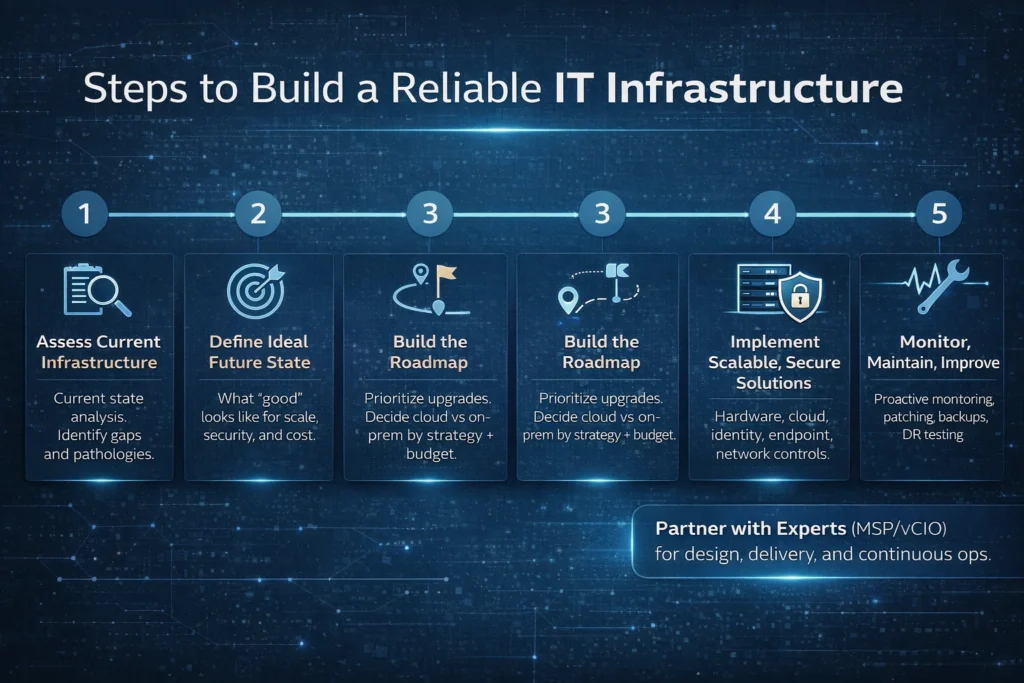
Building or improving IT infrastructure requires a strategic approach. Here’s a step-by-step guide:
- Assess Current Infrastructure: Conduct a thorough audit to identify gaps or weaknesses in your existing setup. The right approach is to conduct a Current State Analysis of how things are done today and identify Pathologies of the current State.
- Develop a Roadmap: Determine your Ideal Future State. You do so by addressing the pathologies of the current state discovered in the previous step. Incorporate these with a plan for upgrades and improvements, prioritizing critical areas such as security, scalability, and deciding between cloud vs. on-prem infrastructure based on long-term business strategy and your budget.
- Invest in Scalable and Secure Solutions: Choose hardware, software, and cloud platforms that can grow with your business while ensuring data protection.
- Implement Proactive Monitoring: Use monitoring tools to detect and address issues before they impact operations.
- Partner with Experts: Work with experienced IT professionals or managed service providers to design and maintain a reliable infrastructure.
How a Superior IT MSP Can Help
A good IT Managed Service Provider who specializes in designing, implementing, and managing IT infrastructure tailored to your business needs is critical for SMBs. Such services include managed IT, vCIO, and cloud solutions, all aimed at building a reliable foundation for growth. By partnering with a well-reputaed MSP, businesses can address common challenges such as scalability, security, and proactive maintenance, ensuring their IT infrastructure supports long-term success.
Conclusion
Reliable IT infrastructure is the backbone of any successful business. It ensures scalability, security, and operational efficiency, enabling organizations to adapt and grow in a competitive environment. By investing in scalable hardware, cloud solutions, and proactive monitoring, businesses can minimize risks and maximize opportunities.
Take a moment to reflect on your current IT infrastructure. Are there gaps or weaknesses that could hinder your growth? Developing a plan for improvement is the first step toward building a strong foundation. If you’re unsure where to start, consider reaching out to us for a consultation. With our expertise, we can help you design and implement an IT infrastructure that supports your business goals.
About Irfan Butt

CRES Technology – Founder and CEO
A strategic leader with over twenty years of progressive experience in Business Administration, Finance, Product Development, and Project Management. Irfan has a proven track record in a broad range of industries, including hospitality, real estate, banking, finance, and management consulting.