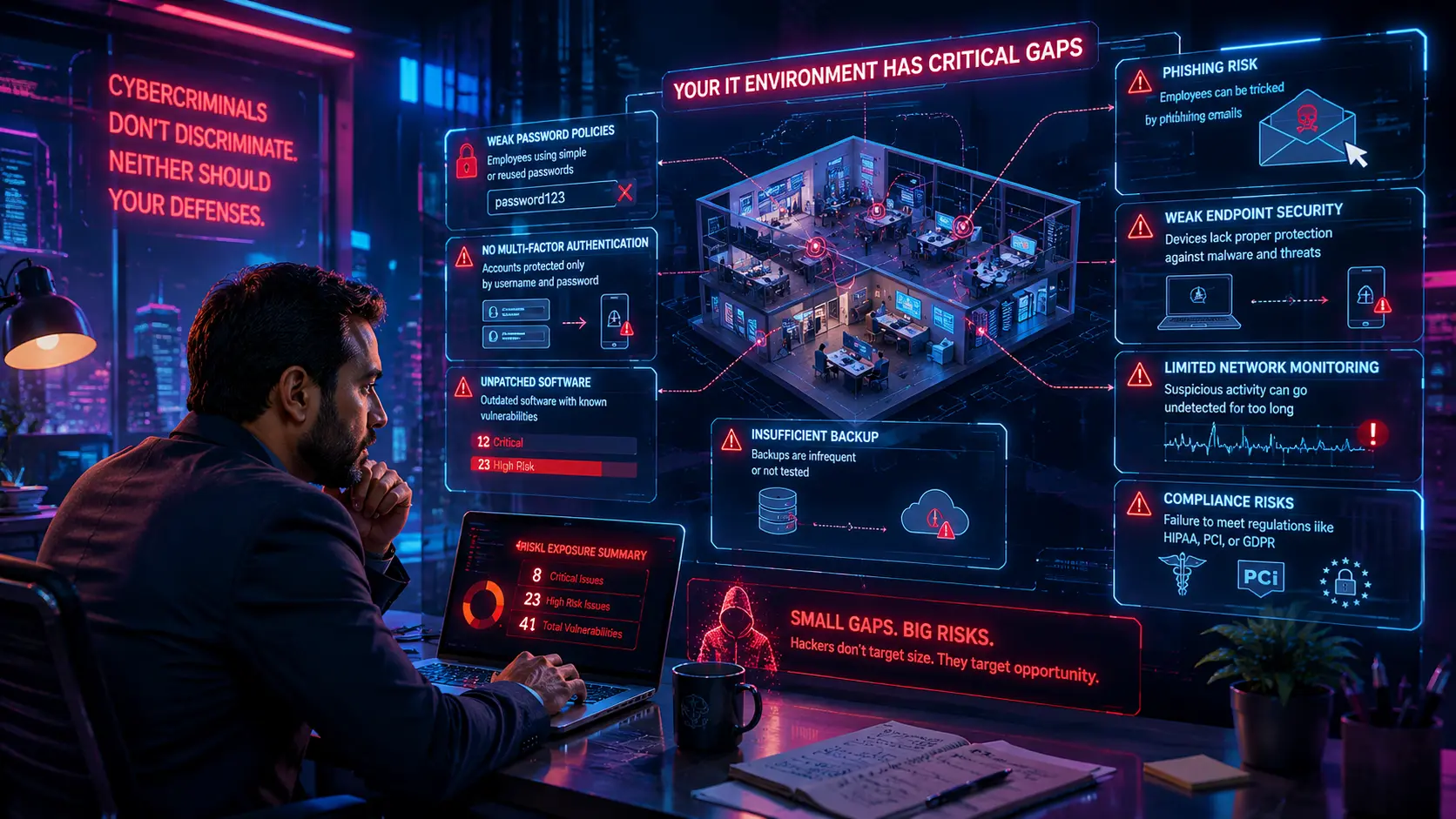
Some small business owners don’t focus too much on cybersecurity either because they’re extremely busy or they think they’re “too small” to be targeted by cybercriminals. After all, why would hackers bother with a company that can’t pay much for ransom like a large enterprise? Unfortunately, this misconception has led to countless SMBs learning the hard way that hackers don’t discriminate. In fact, small and medium-sized businesses are often prime targets because of their perceived lack of robust cybersecurity defenses.
As a IT industry CEO who works with many small and mid-size businesses, I witness this sort of issue very often. In this article, I’ll identify the most common cybersecurity gaps in SMB IT environments, explain why they occur, and provide actionable advice to help businesses address these vulnerabilities effectively.
Why Are SMBs Particularly Vulnerable to Cybersecurity Threats?
SMBs face unique challenges when it comes to cybersecurity, making them attractive targets for cybercriminals. Here’s why:
- Limited Budgets: Many SMBs lack the financial resources to invest in advanced cybersecurity tools and personnel, leaving them exposed to threats.
- Fewer IT Resources: Without a dedicated IT team or cybersecurity specialist, SMBs often struggle to implement and maintain effective security measures.
- Underestimating Risk: A common misconception is that smaller businesses are not attractive targets. However, according to CISA, SMBs are frequently targeted because they often have weaker defenses.
- Growing Threat Landscape: In the past, cybercriminals used automated tools to scan for vulnerabilities, but now they increasingly using AI to strategically target businesses, and even the smallest businesses can become victims to well planned AI-based cyber threats.
These factors combine to create a perfect storm of risk for SMBs, making it critical for them to address their cybersecurity gaps proactively.
What Are the Biggest Cybersecurity Gaps in SMB IT Environments?
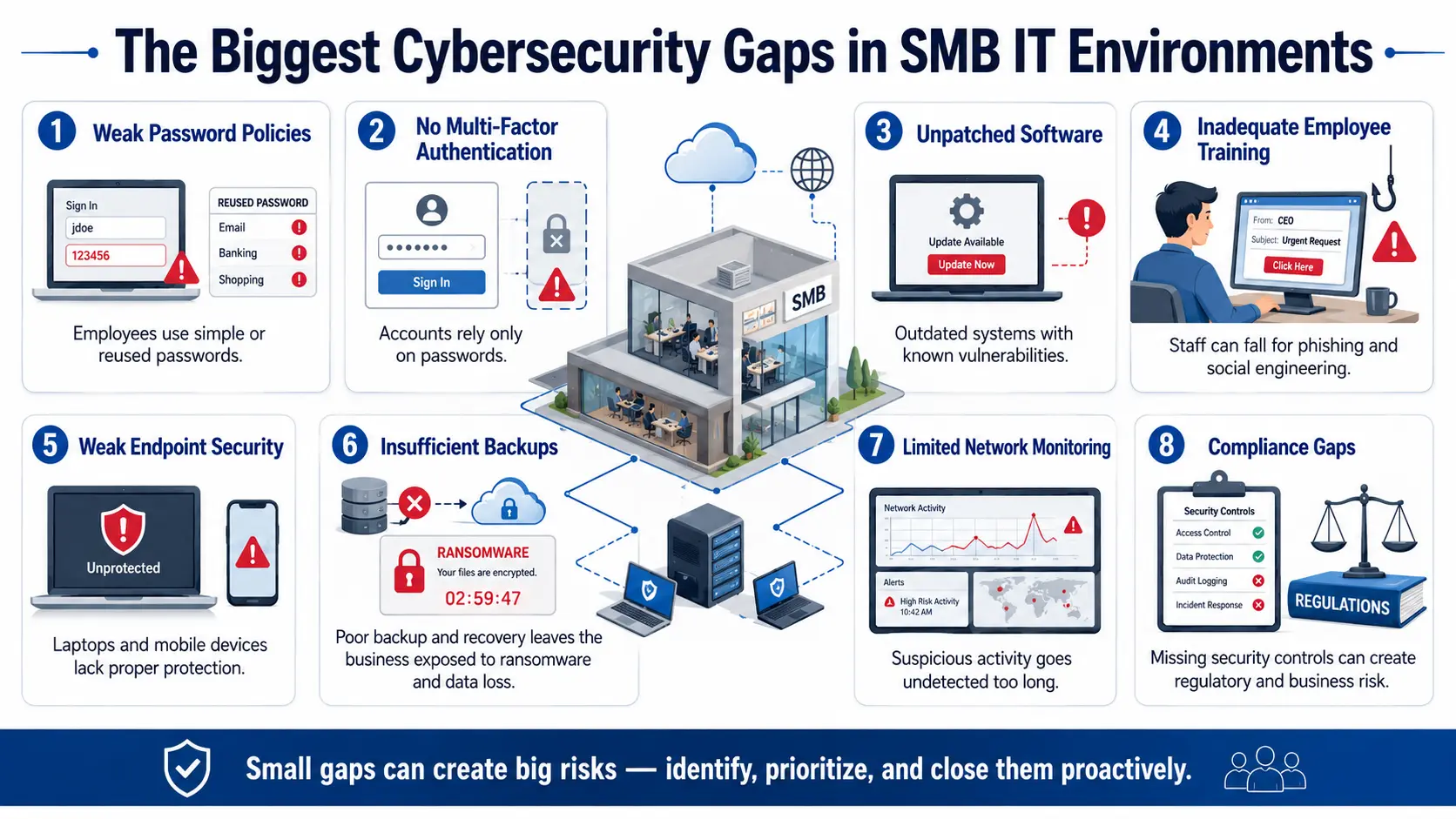
SMBs often face several common cybersecurity gaps that leave them vulnerable to attacks. Here are the most significant ones:
- Weak Password Policies: Employees frequently use simple or reused passwords, making it easy for attackers to gain unauthorized access.
- Lack of Multi-Factor Authentication (MFA): Without MFA, accounts are more susceptible to breaches, even if passwords are compromised.
- Unpatched Software and Systems: Outdated software with known vulnerabilities is a common entry point for attackers.
- Inadequate Employee Training: Employees unaware of phishing scams or social engineering tactics can inadvertently compromise security.
- Insufficient Backup and Recovery Plans: Without reliable backups, SMBs are more vulnerable to ransomware attacks and data loss.
- Weak Endpoint Security: Devices like laptops and smartphones often lack adequate protection, especially in remote work setups.
- Limited Network Monitoring: Many SMBs lack tools to detect and respond to suspicious activity in real time.
- Non-Compliance with Regulations: Failure to meet industry-specific standards like HIPAA or GDPR can lead to fines and security gaps.
Each of these gaps represents a potential vulnerability that cybercriminals can exploit, underscoring the need for a comprehensive cybersecurity strategy.
How Can SMBs Identify Their Cybersecurity Gaps?
Identifying cybersecurity gaps is the first step toward addressing them. Here’s how SMBs can assess their current security posture:
- Conduct a Risk Assessment: Evaluate systems, networks, and processes to identify weaknesses and prioritize areas for improvement.
- Perform Regular Vulnerability Scans: Use tools to detect outdated software, misconfigurations, and other risks.
- Review Access Controls: Ensure employees only have access to the data and systems necessary for their roles.
- Engage a vCIO or Managed IT Provider: Partner with experts like CRES Technology to perform a comprehensive security audit and provide actionable recommendations.
By taking these steps, SMBs can gain a clear understanding of their vulnerabilities and begin addressing them effectively.
What Steps Can SMBs Take to Close Cybersecurity Gaps?
Once gaps are identified, SMBs can take practical steps to strengthen their cybersecurity defenses:
- Implement Strong Password Policies: Require complex passwords and enforce regular updates to reduce the risk of unauthorized access.
- Enable Multi-Factor Authentication (MFA): Add an extra layer of security to critical accounts and systems.
- Keep Software Up to Date: Regularly patch and update all software, operating systems, and hardware firmware to close known vulnerabilities.
- Provide Employee Training: Educate staff on recognizing phishing attempts, avoiding suspicious links, and practicing good cybersecurity hygiene.
- Invest in Endpoint Protection: Use antivirus software and device management tools to secure all endpoints, including laptops and mobile devices.
- Develop a Backup and Recovery Plan: Ensure critical data is backed up regularly and test recovery procedures to minimize downtime in the event of an attack.
- Adopt Network Monitoring Tools: Use tools to detect and respond to suspicious activity in real time, reducing the likelihood of breaches.
- Ensure Compliance: Work with experts to meet industry-specific regulations and avoid penalties while improving security.
These measures can significantly reduce the risk of cyberattacks and help SMBs build a more secure IT environment.
What Role Can Managed IT Services Play in Closing Cybersecurity Gaps?
Partnering with a managed IT services provider can be a game-changer for SMBs looking to enhance their cybersecurity. Here’s how managed services can help:
- Access to Expertise: Managed IT providers bring specialized knowledge and experience that SMBs may lack in-house.
- Proactive Monitoring: Continuous monitoring of systems helps detect and respond to threats before they cause damage.
- Cost-Effective Solutions: Managed services provide enterprise-grade tools and support at a fraction of the cost of building an in-house team.
- Scalable Services: Solutions grow with the business, ensuring cybersecurity measures keep pace with expansion.
- Comprehensive Support: Providers like CRES Technology offer end-to-end services, from risk assessments to incident response planning, tailored to SMB needs.
By leveraging managed IT services, SMBs can address their cybersecurity challenges more effectively and focus on their core business operations.
Conclusion
Cybersecurity is no longer optional for SMBs. Identifying and addressing cybersecurity gaps is essential to protect against evolving threats and ensure business continuity. From weak password policies to insufficient backups, the risks are real, but so are the solutions.
SMBs should start by assessing their current cybersecurity posture and taking proactive steps to close vulnerabilities. Whether it’s implementing MFA, training employees, or investing in endpoint protection, every improvement counts.
We specialize in helping SMBs secure their IT environments with tailored cybersecurity solutions and managed IT services. If you’re ready to take the next step in protecting your business, we’re here to help.
How we can help:
CRES Technology ensures to keep your network and data protected so that you can feel secure and confident.

Many of our clients were in danger of becoming a victims of cybersecurity attacks. They needed an IT security to help prevent attacks from ever happening and help them recover if an attack did happen. That’s where CRES Cybersecurity comes in.
With our extensive capabilities in cybersecurity and partnership with top cybersecurity software companies, we enable you to prevent cyber attacks, network exploitation, data breaches, phishing emails, and more. Our RMM audit assesses the health of your network and resources. We offer network penetration testing to prevent network exploitation, implement data loss prevention policies to prevent data breaches, and phishing email testing to teach your staff to identify phishing emails. CRES Technology implements state-of-the-art Endpoint Detection & Response solutions, allowing your company to be able to recover from any kind of damage caused by cybercriminals.
About Irfan Butt

CRES Technology – Founder and CEO
A strategic leader with over twenty years of progressive experience in Business Administration, Finance, Product Development, and Project Management. Irfan has a proven track record in a broad range of industries, including hospitality, real estate, banking, finance, and management consulting.