
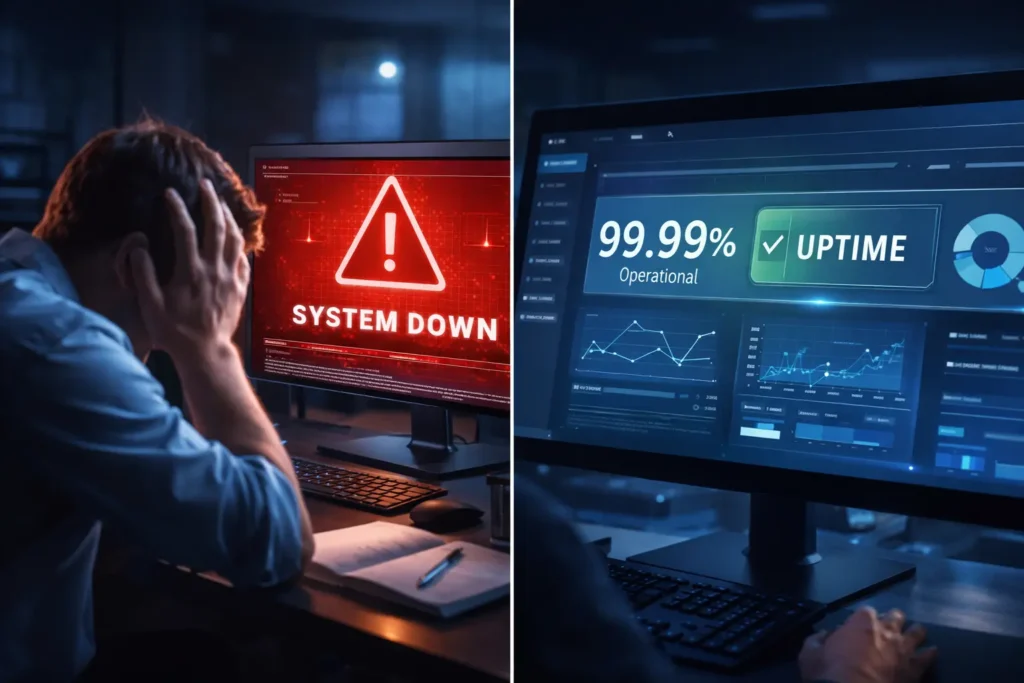
As the Director of IT Services at CRES Technology, I’ve seen it all, businesses that only notice their network or server when it’s down. It’s a bit like realizing the importance of a reliable UPS during a power outage: you don’t think about it until you’re sitting in the dark. The truth is, network and server management is the backbone of business continuity. It ensures that your systems run smoothly, downtime is minimized, and costly disruptions are avoided. In this article, we’ll explore why proactive management is essential and how it can make or break your business operations.
What Is Network and Server Management?
Network and server management involves the monitoring, maintenance, and optimization of an organization’s IT infrastructure to ensure reliability and performance. It’s not just about keeping the lights on; it’s about ensuring that your systems are secure, efficient, and capable of supporting your business goals.
Key components of network and server management include:
- Performance monitoring: Continuously tracking system performance to identify and resolve bottlenecks.
- Software updates: Ensuring that operating systems, applications, and firmware are up to date to prevent vulnerabilities.
- Hardware maintenance: Regularly inspecting and replacing aging equipment to avoid unexpected failures.
- Troubleshooting: Diagnosing and resolving issues before they escalate into major problems.
The purpose of these activities is simple: to keep critical systems operational and secure. For example, consider a retail business with poorly managed networks or servers. During peak hours, slow transaction processing could frustrate customers and lead to lost revenue. Effective management prevents such scenarios, ensuring smooth operations even during high-demand periods.
Why Is Uptime So Important for Businesses?
Uptime refers to the percentage of time that a system or network is operational and accessible. It’s a critical metric for businesses because downtime can have far-reaching consequences.
Here’s why uptime matters:
- Lost revenue: Downtime can halt operations, leading to immediate financial losses. For instance, Amazon reportedly loses millions of dollars for every minute of downtime.
- Reduced productivity: Employees can’t work effectively if systems are down, leading to delays and inefficiencies.
- Customer trust: Frequent outages can erode customer confidence, especially in industries like e-commerce or healthcare.
Consider a healthcare provider experiencing server downtime. Without access to patient records, critical care could be delayed, potentially putting lives at risk and damaging the provider’s reputation. Uptime isn’t just a technical metric, it’s a business imperative.
What Are the Key Challenges in Network and Server Management?
Managing networks and servers is no small feat, especially in today’s complex IT environments. Businesses face several challenges, including:
- Complexity: Modern IT infrastructures often involve a mix of on-premises and cloud systems, making management more intricate.
- Security risks: Poorly managed systems are prime targets for cyberattacks like ransomware or DDoS attacks.
- Resource constraints: Many small and medium-sized businesses (SMBs) lack the in-house expertise or tools to manage their IT infrastructure effectively.
- Scalability: Growing businesses often struggle to scale their networks and servers to meet increasing demands.
Imagine a small e-commerce business during a holiday sale. If their server crashes due to insufficient capacity planning, they could lose sales and frustrate customers. These challenges highlight the need for robust network and server management practices.
How Can Businesses Improve Network and Server Management?

Improving network and server management doesn’t have to be overwhelming. Here are some practical steps businesses can take:
- Implement proactive monitoring: Use tools to continuously monitor network and server performance, identifying issues before they cause downtime.
- Schedule regular maintenance: Perform updates, patches, and hardware checks to keep systems secure and efficient.
- Invest in redundancy: Deploy backup systems and failover solutions to minimize the impact of hardware or software failures.
- Outsource to experts: Partner with managed IT service providers to access specialized expertise and tools.
At CRES Technology, we offer comprehensive network and server management services, including 24/7 monitoring, proactive maintenance, and scalability planning. Our goal is to help businesses maximize uptime and focus on their core operations without worrying about IT disruptions.
Conclusion
Network and server management is essential for maintaining business continuity and minimizing downtime. Without it, businesses risk lost revenue, reduced productivity, and damaged customer trust. Take a moment to assess your current IT infrastructure. Are your systems optimized for reliability and performance? If not, it may be time to seek expert support to ensure your business stays up and running when it matters most.
Read More About IT Infrastructure: Building Reliable IT Infrastructure for Business Growth
How we can help:
We offer proactive support for the health of your network and systems, so that you don’t face any operational challenges.

Many of our new clients faced these challenges. Their IT support worked in a reactive way since they would wait for problems to happen and then fix them. This approach was costly and counterproductive. With our proactive approach, we take action to prevent operational challenges from ever happening.
That is what makes CRES Technology stand out from the rest. Unlike most MSPs, we take action to prevent operational challenges from ever happening. We take a proactive approach to remotely monitor your network resources, perform routine preventive maintenance on your devices and your systems, manage user access, cybersecurity, e-mail services, and the administration of your business applications.