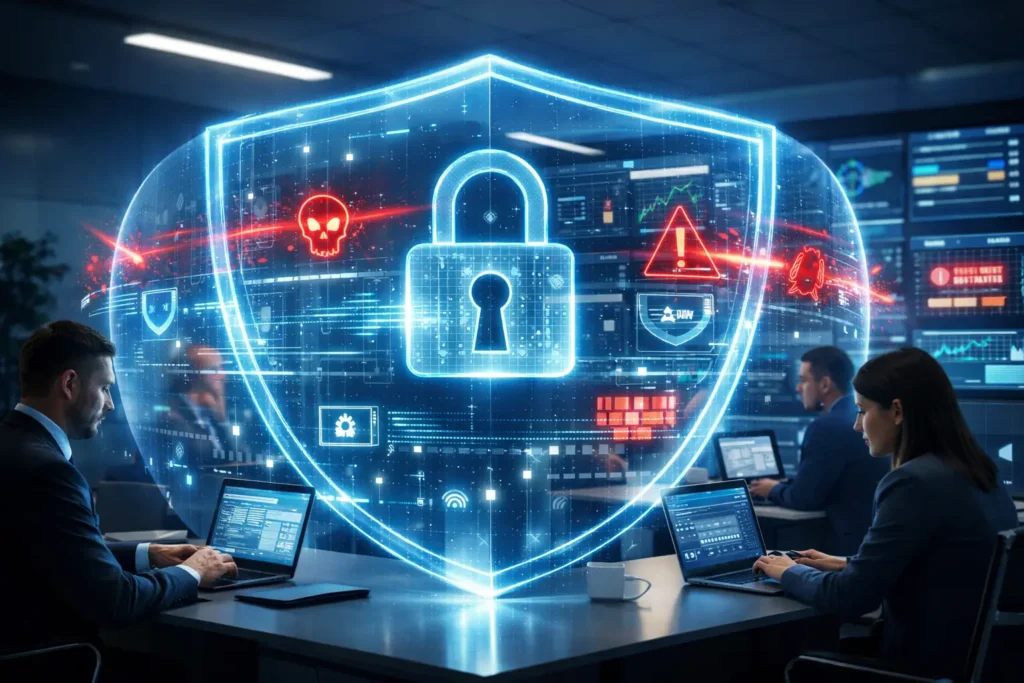
Businesses today rely heavily on digital tools, cloud platforms, and data to drive their operations and growth. However, many underestimate the risks posed by increasingly sophisticated cyber threats. From ransomware attacks to insider threats, the digital landscape is fraught with dangers that can disrupt operations, compromise sensitive data, and damage reputations. As a tech industry professional with decades of experience, I can assure you that proactive cybersecurity measures are no longer optional, they are essential. For organizations just getting started, understanding cybersecurity basics for SMBs is the first step. In this article, we’ll explore actionable insights to help businesses safeguard their operations, data, and reputation in an ever-evolving threat environment.
Why Is Cybersecurity Critical for Modern Businesses?

Cybersecurity is a cornerstone of modern business operations, as the consequences of neglecting it can be severe. Here are some key reasons why it’s critical:
- Data breaches: High-profile breaches, such as the Equifax breach, have demonstrated the devastating financial and reputational impact of compromised data. Businesses risk losing customer trust and facing hefty fines.
- Regulatory compliance: Regulations like PCI DSS, GDPR, HIPAA, and SOC 2 mandate strict data protection measures, making it important for businesses to understand cybersecurity compliance requirements. Non-compliance can result in significant penalties and legal challenges.
- Operational disruptions: Cyberattacks such as ransomware or Distributed Denial of Service (DDoS) attacks can bring business operations to a standstill, causing costly downtime and productivity losses.
What Are the Most Common Cybersecurity Threats?
Understanding the top cybersecurity threats businesses face is the first step in mitigating them. Here are some of the most common threats businesses face today:
- Phishing: Cybercriminals use deceptive emails or messages to trick employees into revealing sensitive information, such as login credentials or financial data.
- Ransomware: Attackers encrypt critical business data and demand payment to restore access. This can cripple operations and lead to significant financial losses.
- Insider threats: Employees, whether acting maliciously or negligently, can inadvertently or intentionally cause security breaches.
- Weak passwords: Poor password hygiene, such as reusing passwords or using easily guessable ones, remains a major vulnerability.
- Accidental disclosure of critical data: Employees can mistakenly share sensitive information, such as financial records or personal data, through external emails or unsecured file-sharing platforms.
What Are the Key Cybersecurity Essentials Every Business Needs?
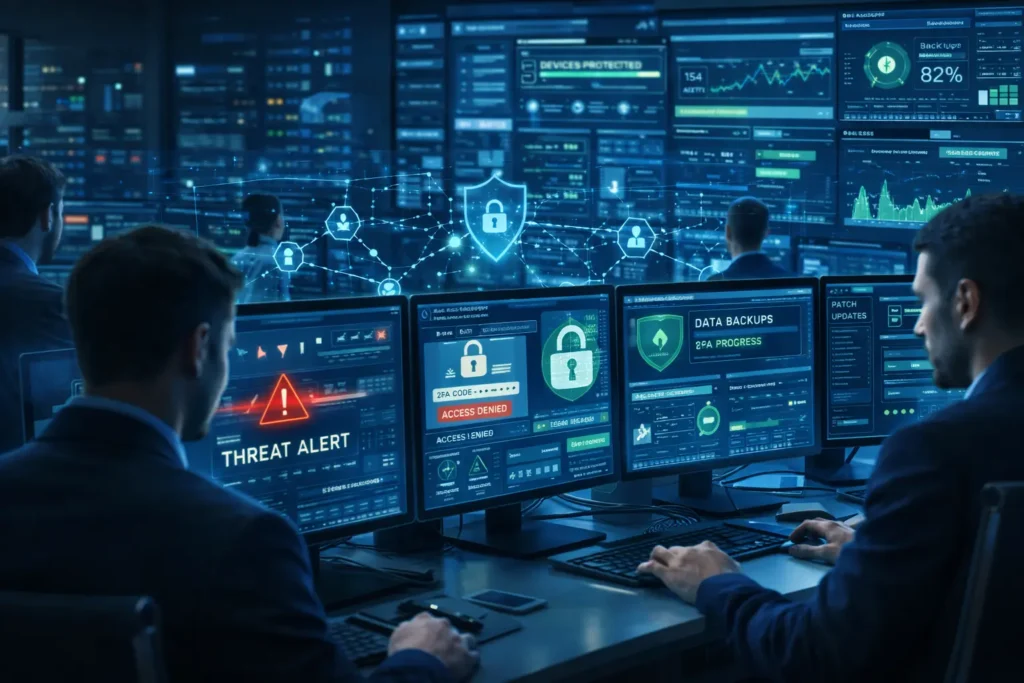
To build a strong cybersecurity foundation, businesses should follow proven cybersecurity best practices for businesses such as the measures below:
- Employee training: Regularly educate staff on recognizing phishing attempts, avoiding suspicious links, and practicing secure online behavior, because cybersecurity training for employees is often the first line of defense.
- Strong passwords and MFA: Enforce the use of unique, complex passwords and enable multi-factor authentication (MFA) for all accounts to add an extra layer of security.
- Regular software updates: Ensure all systems, applications, and devices are updated with the latest patches to close known vulnerabilities.
- Endpoint protection: Deploy antivirus software and Endpoint Detection and Response (EDR) solutions to protect devices from malware and other threats.
- Data Loss Prevention (DLP): Implement DLP tools to monitor and control the sharing of sensitive data, reducing the risk of accidental or intentional data leaks. Protecting sensitive information also requires understanding how data encryption works to secure information both in transit and at rest.
- Data backups: Regularly back up critical data and test recovery processes to ensure business continuity in the event of a cyberattack.
- Network security: Network security: Use firewalls, Virtual Private Networks (VPNs), intrusion detection systems, and network segmentation to safeguard sensitive systems and data. Understanding how these essential cybersecurity tools work helps businesses implement stronger protection strategies.
How Can Businesses Stay Ahead of Evolving Cyber Threats?
Remote and hybrid work environments introduce additional risks such as unsecured home networks, personal device usage, and shadow IT, which makes developing a cybersecurity strategy for remote and hybrid workforces essential. Here are some strategies to stay ahead:
- Risk assessments: Conduct regular risk assessments using frameworks like NIST Cybersecurity Framework or ISO 27001 to identify vulnerabilities and prioritize mitigation efforts.
- Real-time monitoring: Use Security Information and Event Management (SIEM) tools and managed detection and response (MDR) services to detect and respond to threats in real time.
- Incident response plans: Develop and test comprehensive plans for identifying, containing, and recovering from security breaches. It easy to understand it’s importance, but it needs to be a part of your organization’s tech culture to ensure compliance.
- Disaster recovery plans: mature IT departments or MSPs Include recovery strategies for cyber incidents as part of their overall disaster recovery plan to minimize downtime and data loss.
- Partnering with experts: Collaborate with superior Managed IT providers to implement and manage advanced cybersecurity solutions tailored to your business needs. An easy way to determine if they are ready, is not only to ask for their cybersecurity strategy, but also validating their experience.
What Are the Consequences of Ignoring Cybersecurity?
Neglecting cybersecurity can have far-reaching consequences for businesses. Here are some of the most significant risks:
- Financial losses: Cyberattacks can result in fines, lawsuits, and lost revenue. For example, the average cost of a data breach in 2023 was estimated at $4.45 million, according to IBM’s Cost of a Data Breach Report.
- Reputation damage: Customers are less likely to trust businesses that fail to protect their data, leading to long-term reputational harm.
- Operational disruptions: Cyberattacks can halt operations, causing significant downtime and productivity losses that impact both revenue and customer satisfaction.
Conclusion
Different industries face unique cybersecurity risks. Healthcare organizations must protect patient data, real estate firms manage sensitive financial transactions, and legal firms handle confidential client information. Implementing industry-specific cybersecurity strategies helps address these unique security and compliance challenges.
Proactive cybersecurity measures are essential for protecting businesses from the ever-evolving landscape of cyber threats. By implementing foundational security practices, staying vigilant, and leveraging expert support, businesses can safeguard their operations, data, and reputation.
By staying informed and proactive, businesses can not only mitigate risks but also thrive in an increasingly digital and interconnected world.
How we can help:
CRES Technology ensures to keep your network and data protected so that you can feel secure and confident.

Many of our clients were in danger of becoming a victims of cybersecurity attacks. They needed an IT security to help prevent attacks from ever happening and help them recover if an attack did happen. That’s where CRES Cybersecurity comes in.
With our extensive capabilities in cybersecurity and partnership with top cybersecurity software companies, we enable you to prevent cyber attacks, network exploitation, data breaches, phishing emails, and more. Our RMM audit assesses the health of your network and resources. We offer network penetration testing to prevent network exploitation, implement data loss prevention policies to prevent data breaches, and phishing email testing to teach your staff to identify phishing emails. CRES Technology implements state-of-the-art Endpoint Detection & Response solutions, allowing your company to be able to recover from any kind of damage caused by cybercriminals.
About Irfan Butt

CRES Technology – Founder and CEO
A strategic leader with over twenty years of progressive experience in Business Administration, Finance, Product Development, and Project Management. Irfan has a proven track record in a broad range of industries, including hospitality, real estate, banking, finance, and management consulting.