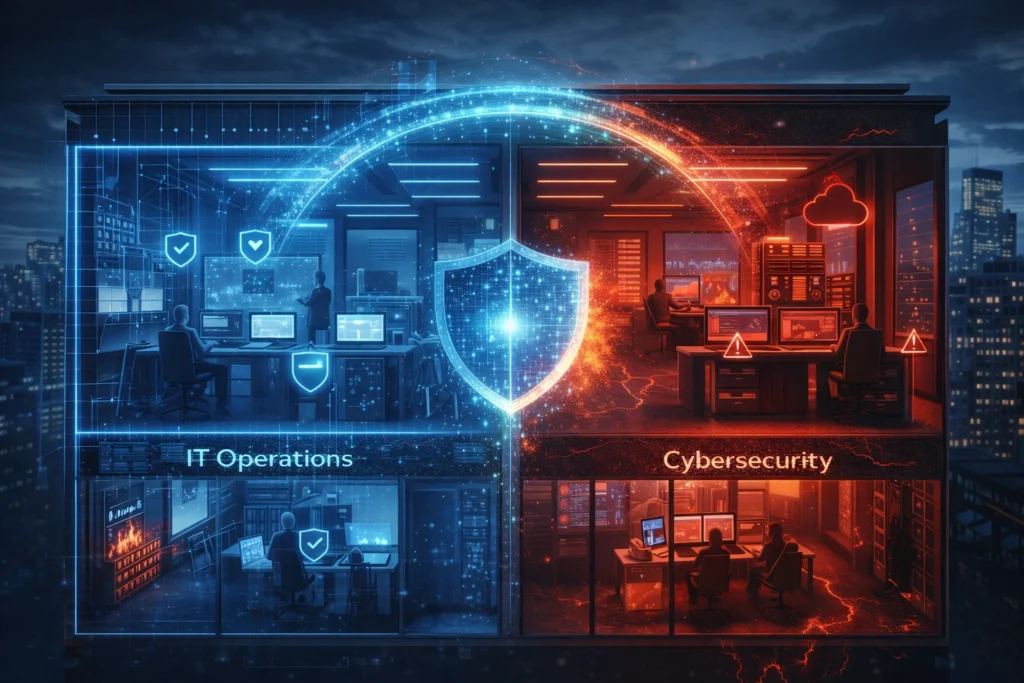
Do you think it’s okay locking your front door but leaving the windows wide open? It sounds absurd, right? Yet, this is exactly what happens when businesses treat cybersecurity and IT management as separate silos. Without collaboration, critical vulnerabilities can go unnoticed, leaving businesses exposed to threats.
This article explores how integrating cybersecurity and managed IT services creates a unified, proactive defense strategy. By aligning these two disciplines, businesses can close protection gaps, improve efficiency, and stay ahead of evolving threats. Let’s dive into why collaboration between cybersecurity and IT management is essential and how to build a unified approach.
Why Should Cybersecurity and Managed IT Work Together?
Cybersecurity and IT management are often treated as separate disciplines, but they are deeply interconnected. When these functions operate in silos, businesses face increased risks and inefficiencies. Here’s why they need to work together:
- Shared responsibility: IT teams manage infrastructure, devices, and networks, while cybersecurity focuses on protecting those assets. Without collaboration, vulnerabilities—such as unpatched software or misconfigured devices—can slip through the cracks. For example, a server managed by IT but overlooked by security could become an easy target for attackers.
- Complex threat landscape: Modern threats, like ransomware, exploit gaps between IT and security teams. A lack of coordination can lead to delayed responses or missed opportunities to prevent an attack. The 2021 Colonial Pipeline ransomware attack, for instance, highlighted how unprotected systems can disrupt entire operations.
- Operational efficiency: A unified strategy reduces redundancies and improves response times during incidents. When IT and security teams share tools and processes, they can work together seamlessly to detect and mitigate threats.
What Are the Key Components of a Unified Protection Strategy?
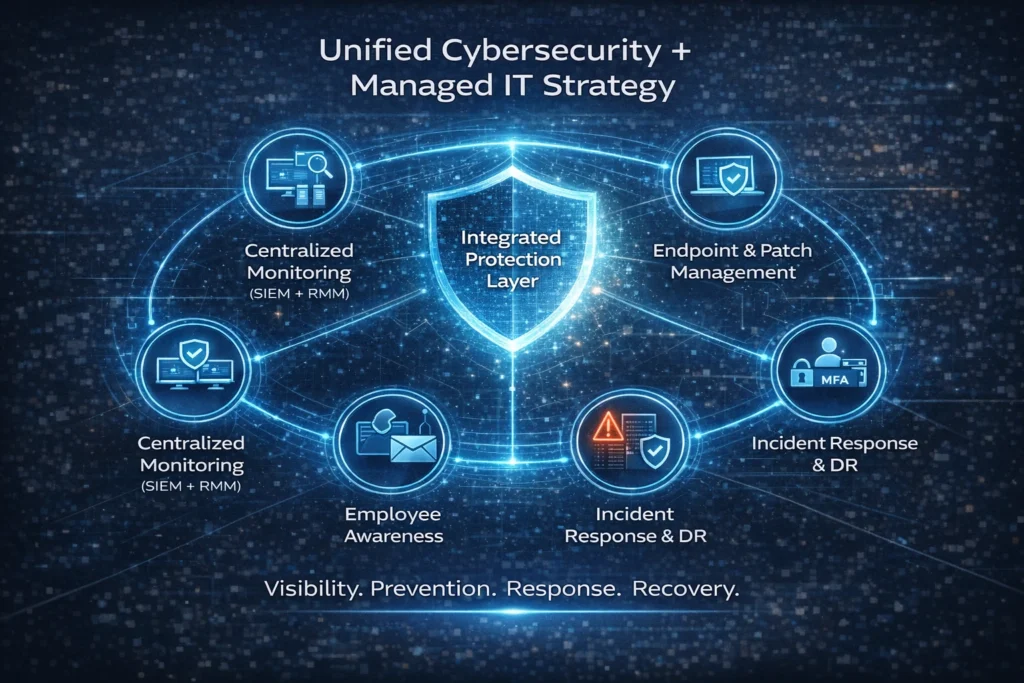
A unified protection strategy combines proactive and reactive measures to safeguard businesses from cyber threats. Here are the foundational components:
1. Centralized Monitoring and Management
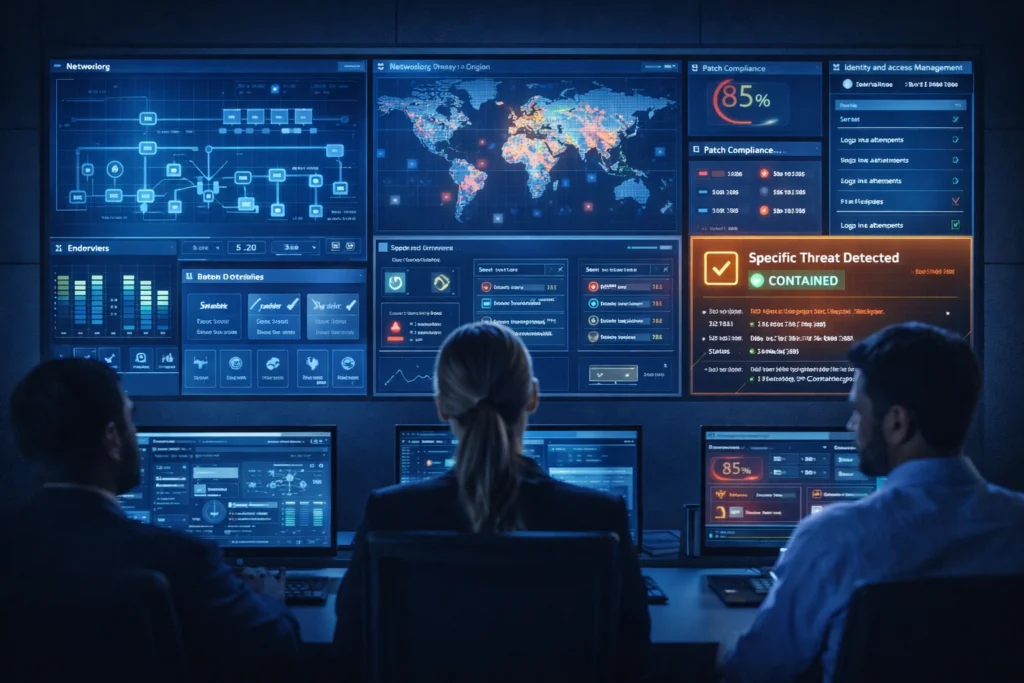
Centralized tools provide visibility across IT infrastructure and security systems, enabling teams to detect and respond to threats quickly. Solutions like Security Information and Event Management (SIEM) and Remote Monitoring and Management (RMM) platforms allow businesses to monitor their networks, devices, and applications in real time. For example, SIEM tools can aggregate logs from multiple sources to identify suspicious activity, while RMM tools help IT teams manage devices remotely.
2. Endpoint Protection and Patch Management
Endpoints, such as laptops, desktops, and mobile devices are common entry points for cyberattacks. Managed IT ensures that devices are updated with the latest patches, while cybersecurity tools protect against malware and unauthorized access. Together, these functions create a robust defense. For instance, patch management can close vulnerabilities that attackers might exploit, while endpoint protection tools detect and block malicious software.
3. Identity and Access Management (IAM)
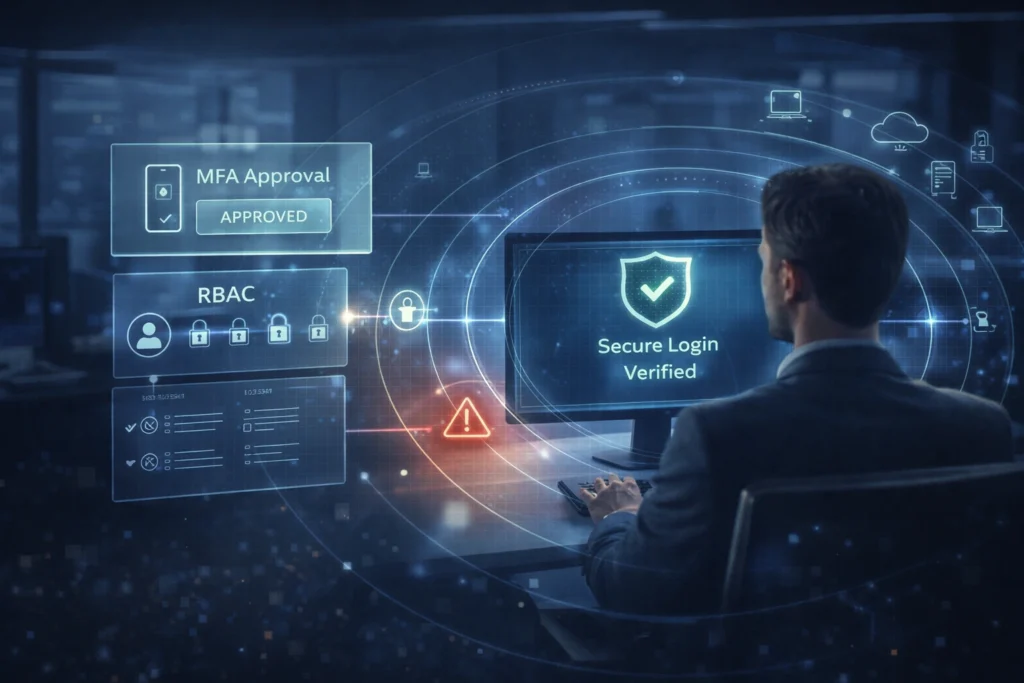
IAM tools, such as multi-factor authentication (MFA) and role-based access controls, bridge IT and security by managing who can access what. These tools ensure that only authorized users can access sensitive systems and data. For example, implementing MFA can prevent unauthorized access even if a password is compromised.
4. Incident Response and Disaster Recovery
Managed IT and cybersecurity teams must collaborate to create and test incident response plans. These plans outline how to detect, contain, and recover from breaches or outages. Regular backups and recovery drills are essential to minimize downtime and data loss. For example, a ransomware attack can be mitigated if the business has secure, up-to-date backups stored offsite.
5. Employee Training and Awareness
Employees are often the weakest link in cybersecurity. Both IT and security teams play a role in educating staff about phishing, social engineering, and secure practices. For instance, a simulated phishing campaign using tools like Phishing Box can help employees learn how to recognize and avoid malicious emails.
How Can Businesses Implement a Unified Protection Strategy?
Integrating cybersecurity and managed IT requires careful planning and execution. Here are actionable steps businesses can take:
- Assess current gaps: Conduct a joint audit of IT and security processes to identify overlaps and gaps. This assessment helps prioritize areas that need improvement.
- Adopt integrated tools: Use solutions that combine IT management and security, such as Microsoft 365 Defender. These platforms provide unified visibility and control over your environment.
- Foster collaboration: Encourage regular communication and shared goals between IT and security teams. For example, hold weekly meetings to discuss potential risks and coordinate responses.
- Partner with experts: Managed IT providers, like CRES Technology, can help businesses implement and maintain a unified strategy. By leveraging external expertise, businesses can ensure their defenses are comprehensive and up to date.
What Are the Risks of Not Unifying Cybersecurity and Managed IT?
Keeping cybersecurity and IT management separate can lead to significant risks, including:
- Increased vulnerabilities: Gaps between IT and security teams can result in unpatched systems, misconfigured devices, or overlooked threats. For example, a misconfigured cloud storage bucket could expose sensitive data to the public.
- Slower incident response: Siloed teams may struggle to coordinate during a breach, delaying containment and recovery efforts. This delay can exacerbate the damage caused by an attack.
- Higher costs: Redundancies and inefficiencies can lead to wasted resources and higher expenses. For instance, separate tools for IT management and security may duplicate functionality, increasing costs without adding value.
Conclusion
Unifying cybersecurity and managed IT is not just a technical decision. It’s a strategic one. By aligning these functions, businesses can improve efficiency, strengthen defenses, and respond to threats more effectively. A unified protection strategy closes gaps, reduces risks, and ensures that IT and security teams work together seamlessly.
By partnering with experts, businesses can focus on their core operations while ensuring their systems and data are secure. Take the first step toward integration today, since your business’s future depends on it.
About Irfan Butt

CRES Technology – Founder and CEO
A strategic leader with over twenty years of progressive experience in Business Administration, Finance, Product Development, and Project Management. Irfan has a proven track record in a broad range of industries, including hospitality, real estate, banking, finance, and management consulting.