If you walk into a café, you often see a menu so extensive that choosing between coffees and teas feels like solving a riddle. That’s often how businesses feel when deciding between cloud and on-premises infrastructure. Both options have their merits and challenges, and the choice can feel overwhelming. In this article, we’ll break down the key differences, explore the pros and cons of each, and provide actionable insights to help you make the best decision for your business.
What’s the Difference Between Cloud and On-Prem Infrastructure?
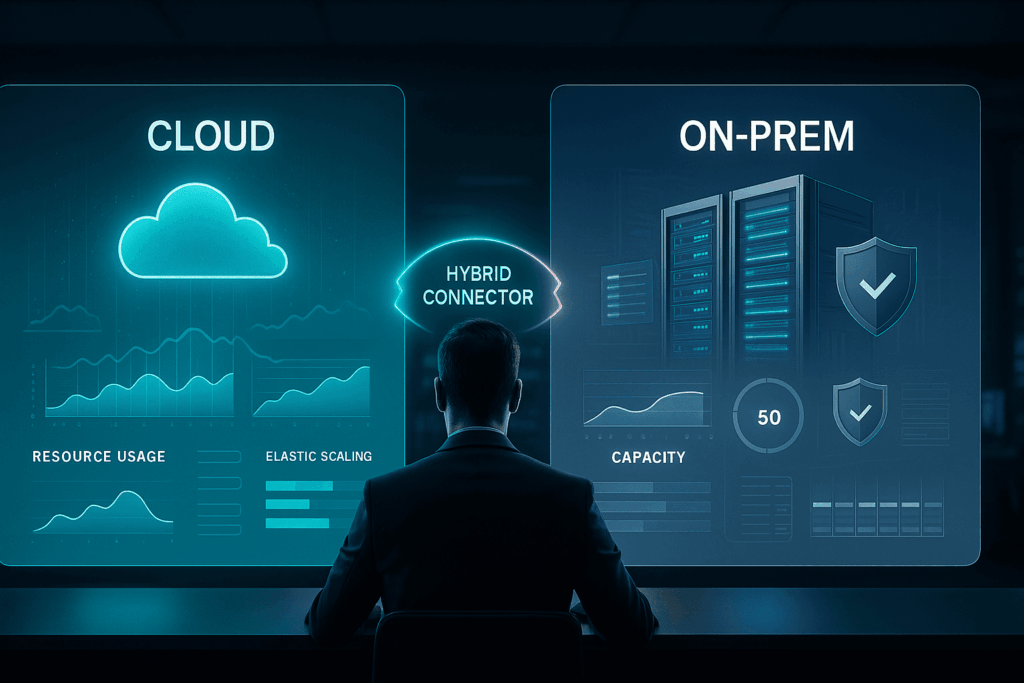
At its core, the difference between cloud and on-premises infrastructure lies in where your data is stored, how resources are accessed, and who manages the infrastructure.
- Cloud Infrastructure: This option involves hosting your data and applications on third-party-managed servers. These resources are accessible via the internet, offering flexibility and scalability.
- On-Premises Infrastructure: Here, your data and applications are hosted on physical servers located within your organization’s premises. Your internal IT team is responsible for managing and maintaining the infrastructure.
For example, a startup might choose cloud infrastructure to scale quickly without investing in expensive hardware. On the other hand, a financial institution may opt for on-premises infrastructure to meet stringent compliance requirements and maintain full control over sensitive data.
What Are the Pros and Cons of Cloud Infrastructure?
Cloud infrastructure offers numerous advantages, but it’s not without its challenges. Let’s explore both sides:
- Pros:
- Scalability: Cloud services allow businesses to easily adjust resources based on demand, making them ideal for fluctuating workloads.
- Cost Efficiency: The pay-as-you-go pricing model eliminates the need for significant upfront hardware investments.
- Accessibility: Employees can access systems and data from anywhere with an internet connection, supporting remote work and collaboration.
- Automatic Updates: Cloud providers often handle software updates and maintenance, reducing the burden on internal IT teams.
- Cons:
- Data Security Concerns: Storing sensitive data offsite can raise security and privacy risks, especially for industries with strict compliance requirements.
- Ongoing Costs: While there are no upfront hardware costs, monthly subscription fees can add up over time.
- High Bandwidth Internet Dependency: A reliable internet connection is essential. Downtime or slow speeds can disrupt operations.
What Are the Pros and Cons of On-Prem Infrastructure?
On-premises infrastructure provides control and security, but it also comes with its own set of challenges. Here’s a closer look:
- Pros:
- Control: Businesses have full control over their hardware, software, and data, enabling customized configurations.
- Security: Keeping data on-site can be advantageous for industries with strict compliance and data privacy requirements.
- Customization: On-prem infrastructure can be tailored to meet specific business needs, offering greater flexibility in design.
- Cons:
- High Upfront Costs: Significant investments in hardware, software, and setup are required.
- Maintenance: Dedicated IT staff are needed to manage and maintain the infrastructure, which can increase operational costs.
- Scalability Challenges: Expanding capacity often requires purchasing additional hardware, which can be time-consuming and costly.
How Do You Decide Which Option Is Right for Your Business?
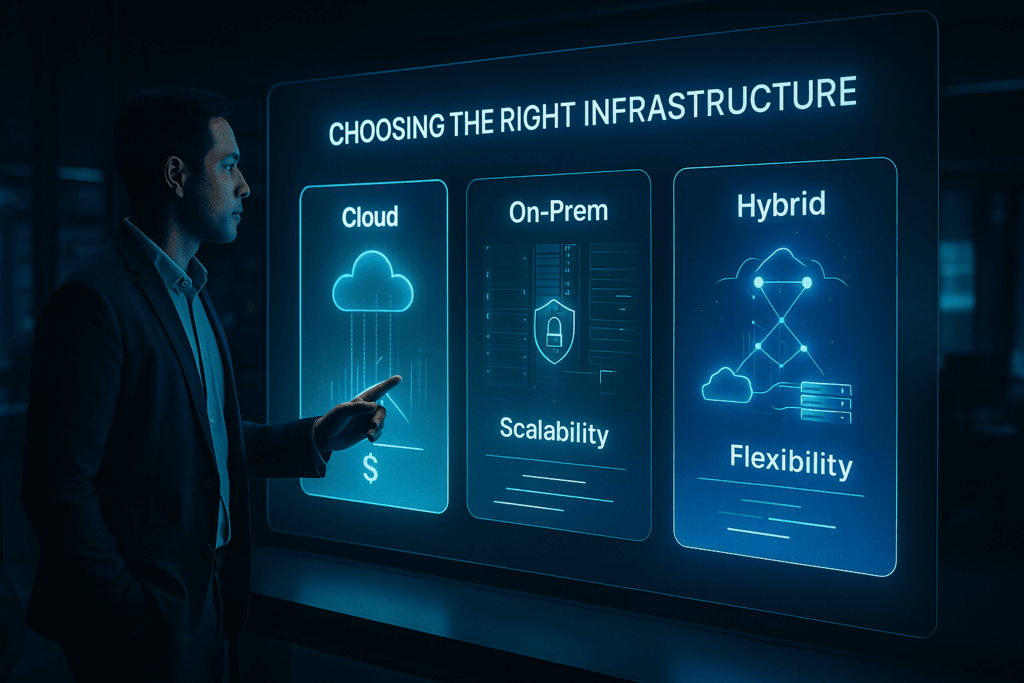
Choosing between cloud and on-premises infrastructure depends on your organization’s unique needs. Here are some key questions to guide your decision-making process:
- What is your budget for IT infrastructure, both upfront and ongoing?
- How critical is scalability for your business growth?
- What are your industry’s compliance and security requirements?
- Do you have an in-house IT team capable of managing on-prem infrastructure?
- How important is remote access and flexibility for your workforce?
For businesses with mixed needs, a hybrid approach can be an excellent solution. For instance, you might use cloud infrastructure for customer-facing applications while keeping sensitive data on-premises to meet compliance requirements.
Real-World Examples: Cloud vs. On-Prem in Action
To illustrate how businesses benefit from these options, let’s look at two examples:
- Cloud Infrastructure: A retail company experiencing seasonal traffic spikes leveraged cloud infrastructure to scale its e-commerce platform during the holiday season. This approach allowed them to handle increased demand without investing in additional hardware.
- On-Prem Infrastructure: A healthcare provider chose on-premises infrastructure to comply with HIPAA regulations and ensure that patient data remained secure and accessible only within their facilities.
Conclusion
There’s no one-size-fits-all solution when it comes to IT infrastructure. Cloud infrastructure offers scalability and flexibility, while on-premises infrastructure provides control and security. The right choice depends on your budget, compliance requirements, and IT capabilities.
At CRES Technology, we understand the complexities of IT infrastructure decisions. Whether you’re considering cloud, on-premises, or a hybrid approach, our team can help you evaluate your options and implement a solution tailored to your business needs.
Whether your head is in the clouds or your feet are firmly on the ground, the right infrastructure can help your business soar.
Read More About IT Infrastructure: Building Reliable IT Infrastructure for Business Growth
How we can help:
We offer proactive support for the health of your network and systems, so that you don’t face any operational challenges.

Many of our new clients faced these challenges. Their IT support worked in a reactive way since they would wait for problems to happen and then fix them. This approach was costly and counterproductive. With our proactive approach, we take action to prevent operational challenges from ever happening.
That is what makes CRES Technology stand out from the rest. Unlike most MSPs, we take action to prevent operational challenges from ever happening. We take a proactive approach to remotely monitor your network resources, perform routine preventive maintenance on your devices and your systems, manage user access, cybersecurity, e-mail services, and the administration of your business applications.
About Irfan Butt

CRES Technology – Founder and CEO
A strategic leader with over twenty years of progressive experience in Business Administration, Finance, Product Development, and Project Management. Irfan has a proven track record in a broad range of industries including hospitality, real estate, banking, finance, and management consulting.